
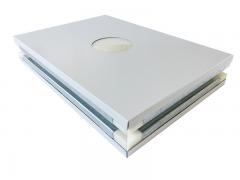
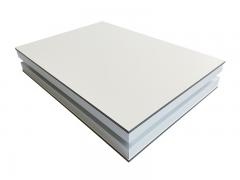
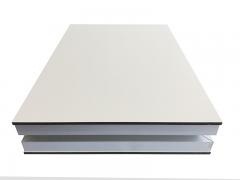
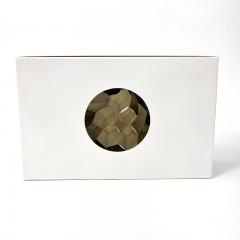
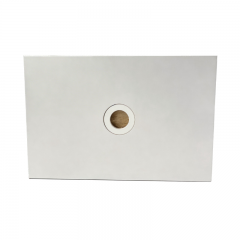
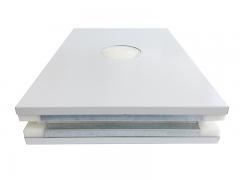
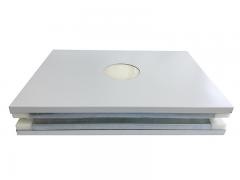
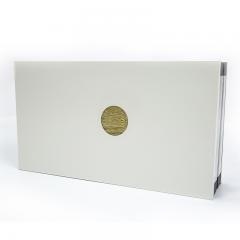
As global regulatory landscapes evolve, the deployment of a high-performance container laboratory has become the strategic gold standard for rapid-response scientific facilities. In 2026, leading modular clean room manufacturers are prioritizing integrated intelligence and sustainability to meet the stringent demands of the modern pharma clean room sector. Selecting the correct cleanroom wall material is no longer just a structural choice but a critical compliance factor, ensuring chemical resistance and surface planarity that align with the latest ISO and GMP technical updates.
In the precision-driven era of 2026, the architecture of sterile environments has shifted from static buildings to intelligent, modular ecosystems. Modern facility managers now evaluate cleanroom systems based on their ability to integrate AI-driven environmental monitoring and rapid-deployment logistics.

The 2026 updates to ISO 14644 and EU GMP Annex 1 place unprecedented emphasis on contamination control strategy (CCS). Modern pharmaceutical facilities must prove not just air cleanliness, but surface integrity. This requires wall materials with a planarity error of less than 0.5mm to eliminate micro-vortices where microbes could settle.
| Criteria Category | 2026 Technical Requirement | WONCLEAN Implementation Standard |
|---|---|---|
| Core Wall Density | 100kg/m³ - 120kg/m³ Rockwool | Class A Fire Rating & 1-Hour Resistance |
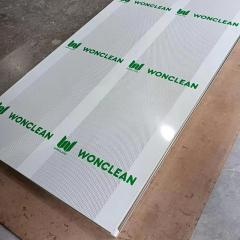
| Surface Material | Anti-static HPL or PET Steel | Chemical-resistant, non-outgassing finish |
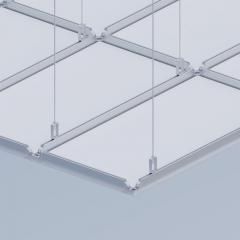
| Joint Technology | Zero-ledge Flush Connection | Self-locking modular tension joints |
| Bio-Decontamination | VHP (Vaporized H2O2) Compatibility | Corrosion-proof molecular bonding |
Experience, Expertise, Authoritativeness, and Trustworthiness (EEAT) are the cornerstones of supplier selection in 2026. A reliable manufacturer integrates the design phase with digital twins, allowing for precise pre-fabrication of utility cut-outs. This factory-first approach ensures that when a laboratory is delivered, it maintains a perfect pressure cascade without manual adjustments.
The shift toward PET-coated steel and High-Pressure Laminate (HPL) has accelerated. These materials offer superior scratch resistance (6H hardness) compared to traditional color-coated steel, making them essential for high-traffic pharmaceutical labs that undergo rigorous daily washdowns and chemical wiping.
A: By integrating unidirectional laminar flow units and specialized modular wall systems, these units achieve the same air velocity (0.45 m/s) and particle counts required for aseptic filling, all within a mobile footprint.
A: Engineering advances in HPL and reinforced sandwich panels now offer an operational lifespan of 20+ years, even under the stress of continuous VHP sterilization cycles.
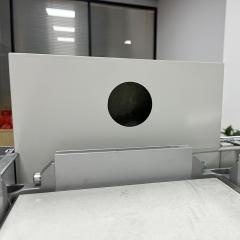
A: Yes, high-tier modular manufacturers use internal structural reinforcement within the panels, allowing for the flush-mounting of HMIs, pass boxes, and heavy HVAC diffusers without compromising airtightness.

 Room JT30151, Building 4, Area B, No. 925 Yecheng Road, Industrial Zone, Shanghai,China
 info@wonclean.com
Allen@wonclean.com
Joy@wonclean.com
info@wonclean.com
Allen@wonclean.com
Joy@wonclean.com
 +8613671979988(Allen)+86 15950938878(Joy)


 online service

