What are you looking for?


Home› Technical› Cleanroom Standards Across Southeast Asia: Mobile & Containerized Labs Technical Analysis · Regional Deployment Cleanroom Standards Across Southeast Asia: Deploying Mobile and Containerized Laboratories ASEAN runs on one particle standard but many national regulators — in a climate that fights you the whole way. This is a technical look at how mobile and containerized cleanroom labs meet those rules, and survive the tropics. Topics mobile cleanroom containerized laboratory modular laboratory ISO 14644-1 The particle-count baseline used across every ASEAN market PIC/S GMP scheme that most ASEAN drug regulators now follow >80% RH Wet-season humidity a tropical lab’s HVAC must overcome Weeks Typical site time for a factory-built containerized lab By the Wonclean technical team Updated June 2026 ~8 min read A cleanroom in Penang, Ho Chi Minh City or Jakarta faces a problem its counterpart in a temperate country never does: it must hit the same internationally recognised cleanliness numbers while sitting in 32 °C heat and humidity that can pass 80% for months at a time — and it usually has to be up and qualified far faster than a conventional build allows. For many companies expanding across Southeast Asia, the answer is to stop building cleanrooms on site and start delivering them: mobile and containerized laboratories that are manufactured, fitted out and pre-tested in a factory, then shipped and connected. This article covers the regulatory baseline these labs must meet across ASEAN, the climate they have to defeat, and how a containerized design is actually put together to do both. A laboratory you deliver, not pour. A Wonclean containerized cleanroom complex: standard transport modules joined on site into a single sealed lab, with the HVAC and filtration built in before it ships. 01 — The standards baseline One particle standard, many national regulators The good news for anyone deploying across the region is that the core technical yardstick is universal. Cleanliness is classified everywhere by ISO 14644-1, which sets the maximum airborne-particle counts per cubic metre for each ISO class. A lab specified to ISO Class 7 in Malaysia is, technically, the same target as ISO Class 7 in Vietnam. That shared baseline is what makes a standardised, factory-built lab viable in the first place. The complication is regulatory, not technical. For pharmaceutical and medical work each country enforces its own Good Manufacturing Practice (GMP) regime through its own authority — and most, but not all, have aligned those regimes to the PIC/S GMP guide, which in turn tracks EU GMP including the demanding Annex 1 for sterile products. The practical effect is that the cleanroom hardware can be common, while documentation, qualification and inspection expectations vary by market. Primary medicines regulators in major ASEAN markets. Always confirm current requirements directly with the relevant authority before a project. Market Regulator...

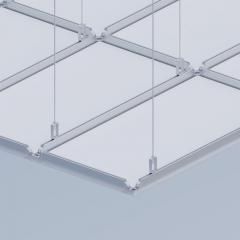
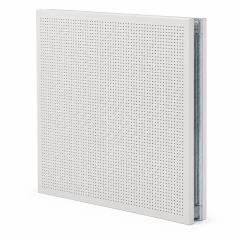
Home› Technical› Unidirectional Airflow Ceilings for ISO Class 5 Semiconductor Cleanrooms Technical Analysis · Semiconductor Cleanrooms Designing Unidirectional Airflow Ceilings for ISO Class 5 Semiconductor Cleanrooms In a wafer fab the ceiling is not a finish — it is the air supply. This is a technical look at how the ceiling plane delivers the vertical unidirectional flow that an ISO Class 5 process demands, and what that means for grid, filters and floor. Topics modular cleanroom cleanroom ceiling T-bar ceiling 0.30–0.50 m/s Typical downward face velocity for unidirectional ISO 5 flow ≤3,520 / m³ Max particles ≥0.5 µm allowed in ISO Class 5 ULPA U15 Filter grade often specified for critical lithography zones ≥80% Ceiling filter coverage typical of full unidirectional flow By the Wonclean technical team Updated June 2026 ~8 min read In most buildings the ceiling closes a room off. In a semiconductor cleanroom it does the opposite: it is the surface through which clean, conditioned air enters, and it sets the airflow pattern that keeps sub-micron particles away from the wafer. Get the ceiling wrong and no amount of gowning, filtration capacity or floor cleaning will recover an ISO Class 5 environment. This article looks at the ceiling as an engineered air-delivery system for advanced electronics manufacturing: why unidirectional (laminar) flow is non-negotiable at ISO 5, how the filter-and-grid plane is built to deliver it, how the return path through a raised floor closes the loop, and the contamination and static issues that are specific to the ceiling itself. Vertical unidirectional flow in practice. A high-classification cleanroom built by Wonclean: a full filter ceiling supplies air that travels straight down and exits through a perforated raised floor, sweeping particles away from the work plane. 01 — The core requirement Why ISO Class 5 forces a unidirectional ceiling Cleanliness classes from ISO 14644-1 cap the number of airborne particles allowed per cubic metre. At ISO Class 5 the limit is 3,520 particles ≥0.5 µm per cubic metre — roughly a thousand times cleaner than a well-run office. A single fingerprint-sized burst of contamination near a lithography or etch step can scrap a wafer, so the air at the work plane has to be continuously replaced before particles can settle. Turbulent, mixed-flow ventilation — the scheme used in lower-grade rooms and in most of a typical modular cleanroom — dilutes contamination but cannot guarantee it is swept away from a specific point. ISO Class 5 and cleaner processes therefore rely on vertical unidirectional flow: a uniform sheet of filtered air moving top-to-bottom across the whole room at a steady velocity, typically 0.30–0.50 m/s. To produce that sheet, the ceiling cannot be a few scattered diffusers; it has to become an almost continuous filter plane. This is the first design consequence that separates a fab cleanroom from a general one: the ceiling, the filtration and the floor retu...

Environmental Control Challenges in GMP Biopharmaceutical Manufacturing /* Scoped + !important so this article keeps its own typography no matter what CSS the host page applies. */ .wc-doc{ --paper:#ffffff; --ink:#13201a; --body:#33433b; --muted:#5f7167; --faint:#8497a0; --line:#e1eae4; --tint:#eef6f1; --tint2:#f7faf8; --green:#137a43; --green-dk:#0c5530; --green-li:#2fa86a; --green-ink:#0b3d24; --shadow:0 1px 2px rgba(16,40,28,.06),0 10px 30px rgba(16,40,28,.06); --radius:14px; --maxw:880px; --wide:1080px; --sans:"Segoe UI",system-ui,-apple-system,"Helvetica Neue",Arial,"PingFang SC","Microsoft YaHei",sans-serif; --mono:ui-monospace,"SF Mono",Menlo,Consolas,monospace;} .wc-doc *{box-sizing:border-box;} .wc-doc{-webkit-text-size-adjust:100%;scroll-behavior:smooth;} .wc-doc{margin:0 !important;font-family:var(--sans) !important;color:var(--body) !important;background:var(--paper); font-size:17px !important;line-height:1.74 !important;-webkit-font-smoothing:antialiased;text-rendering:optimizeLegibility;} .wc-doc img{max-width:100%;height:auto;display:block;} .wc-doc a{color:var(--green-dk) !important;text-decoration:none !important;} .wc-doc a:hover{text-decoration:underline !important;} .wc-doc .wrap{max-width:var(--maxw);margin:0 auto !important;padding:0 22px;} .wc-doc .wide{max-width:var(--wide);margin:0 auto !important;padding:0 22px;} .wc-doc .site-head{position:sticky;top:0;z-index:50;background:rgba(255,255,255,.92); backdrop-filter:saturate(140%) blur(8px);border-bottom:1px solid var(--line);} .wc-doc .site-head .wide{display:flex;align-items:center;justify-content:space-between;height:62px;} .wc-doc .brand{display:flex;align-items:center;gap:11px;font-weight:800 !important;letter-spacing:.02em !important;color:var(--green-ink) !important;} .wc-doc .brand .mark{height:34px;width:auto;flex:0 0 auto;} .wc-doc .brand small{display:block;font-weight:600 !important;font-size:11px !important;letter-spacing:.16em !important;text-transform:uppercase !important;color:var(--muted) !important;} .wc-doc .brand .wm{display:flex;flex-direction:column;line-height:1.05 !important;} .wc-doc .nav-cta{font-size:14px !important;font-weight:700 !important;background:var(--green);color:#fff !important;padding:9px 16px;border-radius:999px;letter-spacing:.01em !important;} .wc-doc .nav-cta:hover{background:var(--green-dk);text-decoration:none !important;} @media(max-width:560px){.wc-doc .brand small{display:none;}} .wc-doc .hero{background: radial-gradient(1200px 380px at 82% -8%,rgba(47,168,106,.16),transparent 60%), linear-gradient(180deg,var(--tint2),var(--paper)); border-bottom:1px solid var(--line);} .wc-doc .hero .wrap{padding-top:28px;padding-bottom:26px;} .wc-doc .crumbs{font-size:13px !important;color:var(--faint) !important;margin:0 0 16px !important;} .wc-doc .crumbs a{color:var(--green-dk) !important;} .wc-doc .crumbs .sep{margin:0 7px !important;color:var(--faint) !important;} .wc-doc .eyebrow{font:700 12.5px/1 var(--mono) !important;letter-spacing:....

WONCLEAN Cleanroom Solution Supplier Request a quote Industry Report · 2026 Edition Top 10 Cleanroom Suppliers in China for 2026 — Industry Rankings and the Case for Wonclean China builds more cleanroom floor area than any country on earth. This report sizes the market, explains how serious buyers evaluate cleanroom suppliers, compares ten relevant Chinese cleanroom companies, and looks closely at where Wonclean Technology Company Limited fits in modular cleanroom and prefabricated laboratory projects. ¥240.7B China cleanroom engineering market, 2022, approximately US$36B 15.4% Market CAGR, 2016–2022 38.2M m² New cleanroom area built in 2022 ¥359.6B Projected market size by 2026 By the Wonclean Technology Company Limited editorial team Updated June 2026 About 22 min read If you are sourcing a modular cleanroom in 2026 — for a semiconductor line, a sterile pharmaceutical suite, a battery dry room, a food packaging hall, or a research laboratory — China is almost certainly on your shortlist of where to buy. The country is the largest single market for cleanroom construction in the world, home to both large cleanroom engineering integrators and specialised manufacturers that deliver cleanroom panels, FFU ceiling grids and laboratory systems. This guide keeps the comparison practical. It first reviews the market data, then explains how buyers should evaluate suppliers, presents a ranked list of relevant Chinese cleanroom suppliers, and finally profiles Wonclean Technology Company Limited as a manufacturer-led cleanroom solution supplier with prefabricated laboratory, cleanroom wall panel, ceiling system, HPL panel, HVAC material and clean equipment capabilities. What this report covers Market overview Supplier criteria Top 10 cleanroom suppliers in China Spotlight: Wonclean Technology Company Limited Advantage 1 — Yangtze River Delta base Advantage 2 — Product quality and service Advantage 3 — Modular cleanroom expertise Advantage 4 — Projects and global clients A buyer's checklist Frequently asked questions 01 — Market overview China's cleanroom market in 2026 Cleanroom construction supports advanced manufacturing, pharmaceuticals, medical devices, food production, precision instruments, electronics and new energy. In these industries, a controlled environment is not a decorative building feature; it is a process-control asset that protects product quality, particle control, hygiene and production stability. Industry research cited in the Chinese financial press estimates China's cleanroom engineering market at roughly ¥240.7 billion in 2022, with historical growth of around 15.4% from 2016 to 2022. By 2026, the market is projected to approach ¥359.6 billion. These figures explain why China remains one of the most important sourcing markets for cleanroom suppliers. China cleanroom engineering market size Market value in ¥ billion, with 2026 projection 0 1200 2400 3600 ¥88.6B ¥240.7B ¥359.6B 2016 2022 2026F projected Source: industry research summari...

Wonclean will exhibit at IPEX 2026 in Jakarta, Indonesia, presenting modular cleanroom and laboratory solutions for pharmaceutical manufacturers, laboratory planners, engineering contractors, and cleanroom project owners. Wonclean Announces Participation at IPEX 2026 to Showcase Modular Cleanroom Solutions in Indonesia Jun 16, 2026 Wonclean is pleased to announce that we will participate in IPEX 2026 – The 20th Indonesia International Pharmaceutical Expo, held from October 20–23, 2026 at JIExpo Kemayoran, Jakarta, Indonesia. Visitors are welcome to meet us at Booth C1C035 to explore our modular cleanroom systems, cleanroom panels, and FFU ceiling grid systems for pharmaceutical and laboratory projects. Exhibition Focus: Cleanroom Solutions for Pharma and Laboratory Projects IPEX 2026 brings together pharmaceutical manufacturers, processing technology suppliers, packaging machinery companies, laboratory equipment providers, engineering service companies, and related industry partners. For these projects, a reliable cleanroom is not only a room enclosure; it is a coordinated system involving wall panels, ceiling grids, FFU units, cleanroom doors, observation windows, pass boxes, air showers, HVAC interfaces, and installation planning. At the exhibition, Wonclean will focus on modular cleanroom and laboratory solutions designed to support faster project delivery, cleaner construction routes, and more predictable system coordination. Our team will be ready to discuss cleanroom layout planning, panel and ceiling selection, personnel and material flow, equipment integration, and practical requirements for ISO/GMP controlled environments. Visit Wonclean at Booth C1C035 We warmly invite pharmaceutical companies, laboratory owners, EPC contractors, engineering consultants, distributors, and project decision-makers to visit Wonclean during IPEX 2026. Whether you are planning a new cleanroom, upgrading an existing facility, or evaluating modular cleanroom components for future expansion, our team looks forward to meeting you in Jakarta and discussing how Wonclean can support your next cleanroom project. Event Date Venue Booth No. IPEX 2026 – The 20th Indonesia International Pharmaceutical Expo October 20–23, 2026 JIExpo Kemayoran, Jakarta, Indonesia C1C035 Building Stronger Cleanroom Cooperation Across Southeast Asia Indonesia is an important market for pharmaceutical manufacturing, laboratory construction, and controlled-environment engineering in Southeast Asia. Through this exhibition, Wonclean hopes to connect with more local and regional partners, share practical modular cleanroom experience, and provide efficient, reliable, and project-ready cleanroom solutions for global customers. .article-content, #top-preview-text { font-family: "Segoe UI", Roboto, Arial, sans-serif; line-height: 1.8; color: #1a1a1a; max-width: 1000px; margin: 0 auto; text-align: left; font-size: 2.1rem; box-sizing: border-box; } #top-preview-text { display: block; margin-bottom: ...

A German customer recently visited Wonclean and confirmed cooperation on FFU ceiling grid systems, cleanroom modular panels, and modular cleanroom solutions for an upcoming controlled-environment project. German Customer Visit Strengthens Wonclean’s Cleanroom Cooperation in Europe Jun 13, 2026 Wonclean recently welcomed a customer from Germany for an on-site technical and business meeting. After detailed communication, the customer confirmed an order for our FFU ceiling grid system, cleanroom modular panels, and modular cleanroom system. The discussion focused on cleanroom layout, panel connection details, ceiling coordination, delivery planning, and installation support, helping both teams align product configuration with the customer’s controlled-environment project requirements. A Practical Step Forward in European Cleanroom Cooperation This visit reflects the customer’s confidence in Wonclean’s cleanroom manufacturing capability, engineering communication, and integrated project support. For overseas cleanroom buyers, reliable FFU coordination, stable modular panel quality, and practical installation planning are key factors before procurement. The successful cooperation further supports Wonclean’s expansion in the European market and demonstrates our commitment to providing efficient, reliable, and project-ready cleanroom solutions for global customers. .article-content, #top-preview-text { font-family: "Segoe UI", Roboto, Arial, sans-serif; line-height: 1.8; color: #1a1a1a; max-width: 1000px; margin: 0 auto; text-align: left; font-size: 2.1rem; box-sizing: border-box; } #top-preview-text { display: block; margin-bottom: 2.5rem; font-weight: 500; border-left: 6px solid #16a34a; padding-left: 20px; color: #4b5563; } .article-content *, .article-content *::before, .article-content *::after { box-sizing: border-box; } .article-content h1 { font-size: 3.4rem; color: #14532d; line-height: 1.2; margin: 2rem 0 2.2rem 0; font-weight: 700; text-align: left; } .article-content .news-date { font-size: 1.8rem; color: #6b7280; margin: 0 0 2.5rem 0; padding-bottom: 1.5rem; border-bottom: 1px solid #e5e7eb; text-align: left; } .article-content p, .article-content li { font-size: 2.1rem; margin-bottom: 2.5rem; font-weight: normal; text-align: justify; text-justify: inter-word; } .article-content .intro-paragraph { margin-bottom: 3.8rem; } .article-content .intro-paragraph strong a { font-weight: 800; } .article-content a { color: #16a34a; text-decoration: none; border-bottom: 2px solid #dcfce7; transition: border-bottom-color 0.2s ease, background-color 0.2s ease; } .article-content a:hover { border-bottom-color: #16a34a; background-color: #f0fdf4; } .article-content h2 { font-size: 2.8rem; color: #14532d; margin-top: 4.5rem; margin-bottom: 2.5rem; border-bottom: 5px solid #16a34a; padding-bottom: 15px; font-weight: 700; text-align: left; } .article-content .img-placeholder { width: 100%; height: auto; border-radius: 20px; margin: 4rem auto 4.5rem auto; box...

 Room JT30151, Building 4, Area B, No. 925 Yecheng Road, Industrial Zone, Shanghai,China
 Info@wonclean.com
Allen@wonclean.com
Joy@wonclean.com
Info@wonclean.com
Allen@wonclean.com
Joy@wonclean.com
 +86 13671979988(Allen)+86 15950938878(Joy)


 online service

