What are you looking for?
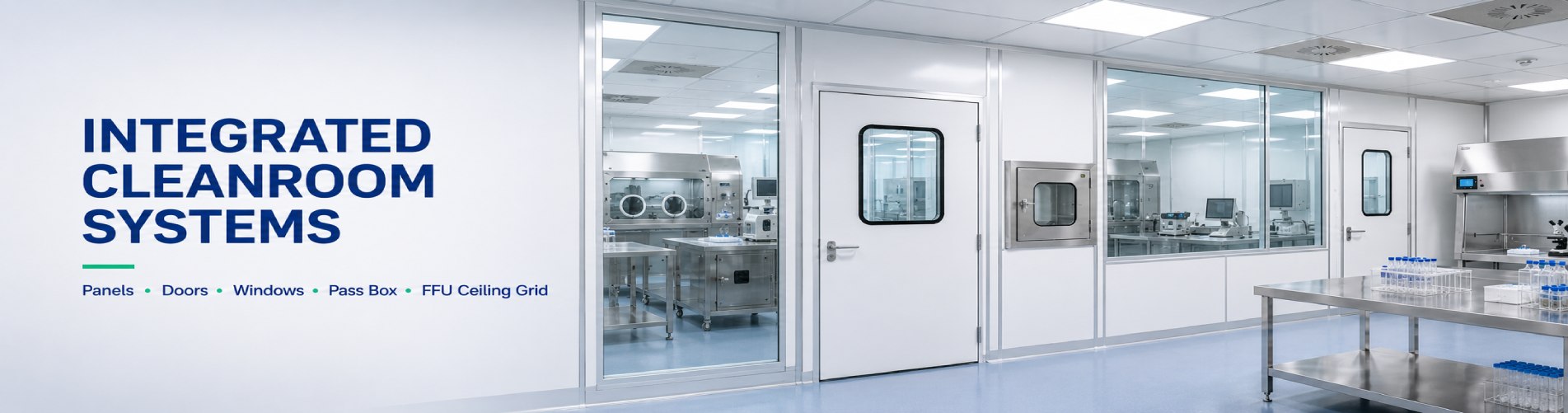







In highly controlled environments, ensuring that a cleanroom consistently meets its design and operational standards is critical. Cleanroom validation is a systematic process used to confirm that facilities, equipment, and environments function as intended, ensuring compliance with regulatory requirements and user specifications. For companies like Wonclean, providing professional cleanroom validation services helps clients achieve operational efficiency while maintaining long-term cleanroom compliance.
A cleanroom is a modular environment in which key factors such as temperature, airborne particles, microbial load, relative humidity, pressure differentials, and airflow are strictly controlled. The primary purpose of cleanroom validation is to verify that facility designs meet intended use, that equipment and systems comply with user requirement specifications (URS), and that all regulatory standards are fully adhered to.
Once validation is complete, cleanrooms are certified according to the selected ISO 14644-1 classification. Each ISO class has specific requirements, and facilities must meet these conditions to obtain the corresponding certification.
Validation for a new cleanroom follows a structured lifecycle comprising five stages, each designed to control and verify the performance of the modular environment. If equipment or control systems are modified, re-validation is required to maintain compliance.
Design qualification verifies, with objective evidence, that the facility’s design meets its intended purpose. The DQ protocol typically reviews:
The output of the DQ stage includes a DQ report and a Standard Document List (SDL), recording design requirements, procurement records, drawings, component lists, checklists, and FAT results. Approval of DQ is a prerequisite for starting Installation Qualification (IQ).
Installation qualification confirms that installed equipment meets both user and design requirements. The IQ protocol usually covers:
The IQ report documents all tests, calibrations, deviations, consumables, spare parts, and vendor certificates. IQ approval is required before Operational Qualification (OQ) can begin.
OQ provides objective evidence that the cleanroom operates within specified parameters and consistently meets functional requirements. Testing generally includes:
The OQ report documents whether key cleanroom parameters meet URS functional requirements.
PQ verifies that the cleanroom consistently achieves intended performance under established environmental conditions. Performance monitoring includes:
The PQ report analyzes the cleanroom’s performance based on specified equipment parameters and is a prerequisite for certification.
After successful validation, the cleanroom receives ISO classification certification. ISO 14644-3 defines evaluation and measurement methods, including ten standard tests:
Post-certification, continuous monitoring ensures cleanroom compliance. ISO 14644-2 provides guidance for monitoring after validation, and statistical process control (SPC) is commonly used to track environmental parameters and detect deviations promptly.
Why the Selected Airborne Particle Cleanliness Level is Important?
Related:Why Cleanroom Classifications Matter For Your Facility?

 Room JT30151, Building 4, Area B, No. 925 Yecheng Road, Industrial Zone, Shanghai,China
 Info@wonclean.com
Allen@wonclean.com
Joy@wonclean.com
Info@wonclean.com
Allen@wonclean.com
Joy@wonclean.com
 +86 13671979988(Allen)+86 15950938878(Joy)


 online service

