What are you looking for?
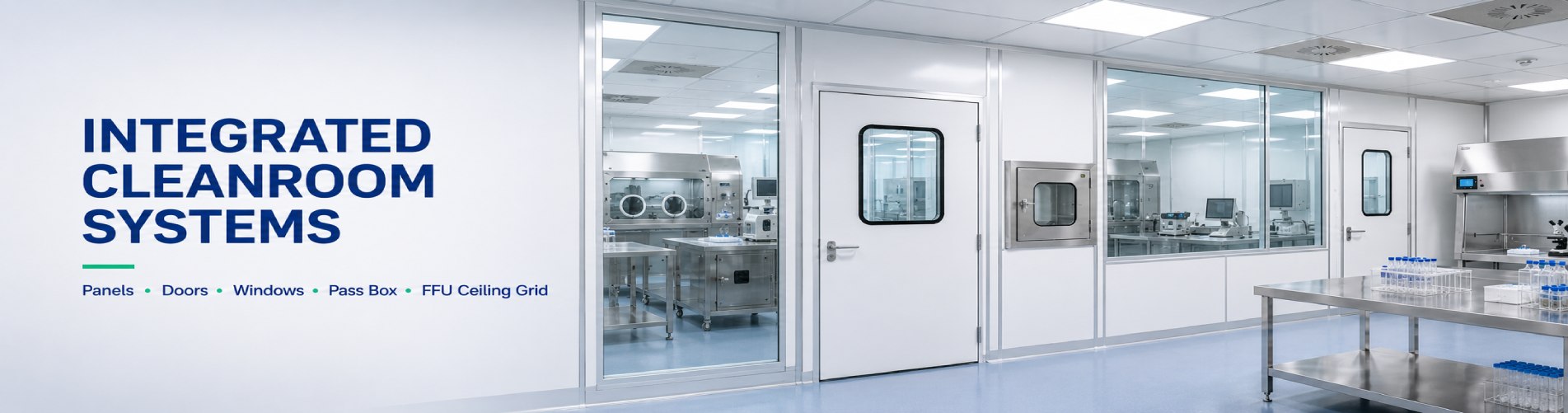



In modern clean room operations for precision manufacturing and life sciences, ISO 14644-1 clean room standards, FED-STD-209E classifications, and GMP clean room regulations are the “guardians of quality.” But when engineers talk about a “Class 100 clean room,” the quality team requests “ISO 5,” and auditors review “GMP Grade A” documents, it’s easy to get confused. Don’t worry—this guide will explain the relationship between ISO clean room standards, FED-STD-209E, and GMP clean rooms, so you can confidently manage design, validation, and daily operations.
Mixing these terms can be headache-inducing. Think of them as different languages: some people speak American English, some British English, and some “legalese.” Without knowing how they relate, you could make mistakes during design, acceptance, or audits.
In short:
ISO 14644-1 is the global standard that tells you “how many particles are allowed in a clean room, and how to measure and test them.”
First issued in 1963, FED-STD-209E measured clean room classes in cubic feet. It was officially replaced by ISO standards in 2001.
GMP is not just about particle counts—it’s a regulatory framework for pharmaceuticals and medical devices.
|
ISO Classification |
Maximum Number of Particles in Air |
|||||
|
(Particles in each cubic meter = or>the specified size) |
||||||
|
>0.1 μm |
>0.2 μm |
>0.3 μm |
>0.5 μm |
>1.0 μm |
>5.0 μm |
|
|
ISO 1 |
10 |
- |
- |
- |
- |
- |
|
ISO 2 |
100 |
24 |
10 |
- |
- |
- |
|
ISO 3 |
1,000 |
237 |
102 |
35 |
- |
- |
|
ISO 4 |
10,000 |
2,370 |
1,020 |
352 |
83 |
- |
|
ISO 5 |
100,000 |
23,700 |
10,200 |
3,520 |
832 |
- |
|
ISO 6 |
1,000,000 |
237,000 |
102,000 |
35,200 |
8,320 |
298 |
|
ISO 7 |
- |
- |
- |
352,000 |
83,200 |
2,930 |
|
ISO 8 |
- |
- |
- |
3,520,000 |
832,000 |
29,300 |
|
ISO 9 |
- |
- |
- |
35,200,000 |
8,320,000 |
293,000 |
|
Standard |
Classification |
Unit |
Key Features |
|
ISO 14644-1 |
ISO Class 1-9 |
Particles/m³ |
International, covers ultra-clean to controlled environments |
|
FED-STD-209E |
Class 1, 10, 100 … 100,000 |
Particles/ft³ |
Imperial units, obsolete but still used colloquially |
|
GMP |
Grade A-D |
Particles/m³ |
Regulatory classification, distinguishes static/dynamic states |
GMP Grade A (dynamic) = ISO 5 = FS209E Class 100
GMP Grade B (static) = ISO 5
GMP Grade B (dynamic) ≈ ISO 7
GMP Grade C (static) = ISO 7 = FS209E Class 10,000
GMP Grade D (static) = ISO 8 = FS209E Class 100,000
GMP covers more than particle counts; it’s a full quality management system including personnel training, facility maintenance, equipment validation, process control, microbial monitoring, and documentation.
cGMP (“current” Good Manufacturing Practice) emphasizes using the latest technology and methods to ensure quality, rather than just following old rules.
The concept is simple: continuous improvement for reliable product quality and safety.
Use ISO 14644-1 terminology for new projects and documents.
Understand the other party’s standard system when communicating, and convert if needed.
In pharma/medical devices, ISO serves as a technical tool to meet GMP requirements.
Embrace cGMP principles and modern tech to make environments controllable and traceable.
Mastering these standards allows you to design, accept, and operate clean rooms efficiently and legally while confidently handling clients and auditors alike.
A: Class 100, based on the old FS209E standard, is mostly historical and used for informal reference. Modern projects adopt ISO clean room standards, such as ISO 5 or ISO 6, for international compliance and better consistency.
A: ISO 5 and GMP Grade A are not identical. ISO 5 focuses on static particle counts, while GMP A requires dynamic airflow, unidirectional flow, and strict microbial control, emphasizing real-time production process safety.
A: Both are needed. ISO reports validate facility performance, while GMP monitoring records production process compliance, including particle counts, microbial levels, and airflow. Together, they provide a comprehensive audit record.
A: Yes, GMP principles can improve risk management and internal controls beyond pharmaceuticals. Electronics and food industries can apply GMP concepts to enhance product quality, safety, and regulatory compliance.
A: ISO clean room standards focus on controlling airborne particle counts in a controlled environment, while GMP clean room standards emphasize overall production process quality, including particle control, microbial limits, airflow patterns, and operator practices. ISO measures facility performance, GMP ensures product safety during manufacturing.
A: ISO (International Organization for Standardization) sets global standards for environmental and product quality, such as ISO 14644 for clean rooms. GMP (Good Manufacturing Practice) is a regulatory framework ensuring products are consistently produced and controlled according to quality standards. ISO is facility-focused; GMP is process-focused.
A: FS209E is an older U.S. standard for clean rooms, with classifications like Class 100, 1,000, and 10,000. Its ISO equivalent is ISO 5 (Class 100), ISO 6 (Class 1,000), and ISO 7 (Class 10,000). Modern clean room projects use ISO standards for international compliance and consistent design.
A: GMP clean rooms are classified by the risk level of the product and process: Grade A (high-risk zones), Grade B (background for A), Grade C and D (lower-risk areas). Classification includes particle limits, microbial limits, and airflow requirements to ensure product safety during production.

 Room JT30151, Building 4, Area B, No. 925 Yecheng Road, Industrial Zone, Shanghai,China
 Info@wonclean.com
Allen@wonclean.com
Joy@wonclean.com
Info@wonclean.com
Allen@wonclean.com
Joy@wonclean.com
 +86 13671979988(Allen)+86 15950938878(Joy)


 online service

