What are you looking for?
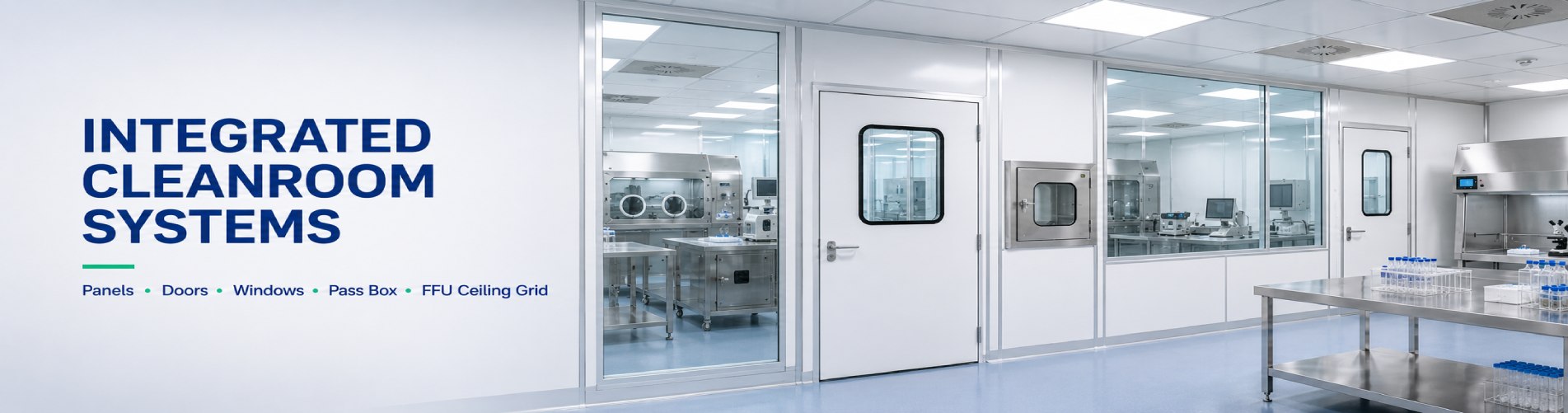







Many clients ask the same question at the very beginning of a project: “Do we really need a cleanroom?”
In life sciences and high-precision manufacturing, the answer is almost always yes. A well-designed cleanroom projects solution is not just a physical space—it is a long-term, integrated engineering system. As a professional cleanroom solution provider, Wonclean explains how cleanroom projects work, from concept to sustainable operation.
By definition, a cleanroom is a controlled environment that uses engineering methods to continuously limit airborne particles, microorganisms, and chemical contaminants.
In real projects, however, “clean” is not a fixed condition. It is an ongoing process that must be designed, monitored, and maintained over time.
Cleanroom projects deliver value in four critical ways:
In regulated industries, a cleanroom is not an enhancement—it is a prerequisite.
Successful cleanroom projects usually begin with three fundamental decisions.
Different industries require different cleanliness classifications:
|
Application |
Common Standards |
|
Pharmaceutical & biotech |
GMP A/B/C/D, ISO 5–8 |
|
Sterile compounding |
USP 797 / USP 800 |
|
Medical devices |
ISO 13485 |
|
High-tech manufacturing |
ISO 5–7 |
Higher cleanliness levels allow fewer particles and demand greater system stability.
The “core systems” of a cleanroom include:
This is where modern cleanroom technology becomes essential—determining whether the room can operate reliably long after validation.
In most cleanroom projects, people are the largest contamination source. Effective designs therefore include:
Today’s cleanrooms are far more than steel panels and air handlers.
These innovations are helping cleanroom projects shift from high-energy facilities to optimized, data-driven environments.
From Wonclean’s project experience, the most frequent challenges include:
Solution: Strict gowning discipline and continuous environmental monitoring
Solution: ESD flooring, grounded workstations, and humidity control
Solution: Address energy use and maintenance strategy during the design phase
From vaccine manufacturing plants and flexible CDMO facilities to hospital sterile pharmacies, one lesson repeats itself:
While many teams begin by reviewing pictures of clean rooms or images of clean rooms across the global cleanroom world, lasting success always depends on engineering logic, operational planning, and lifecycle thinking.
In summary, cleanroom projects are not about constructing a room—they are about integrating process requirements, engineering systems, and operational management into a single, reliable framework.
Wonclean’s role is to help clients move beyond basic compliance toward cleanroom environments that are stable, efficient, and sustainable over time.
If you are planning a new facility or upgrading an existing cleanroom, we’re ready to help you get it right from the start.

 Room JT30151, Building 4, Area B, No. 925 Yecheng Road, Industrial Zone, Shanghai,China
 Info@wonclean.com
Allen@wonclean.com
Joy@wonclean.com
Info@wonclean.com
Allen@wonclean.com
Joy@wonclean.com
 +86 13671979988(Allen)+86 15950938878(Joy)


 online service

