What are you looking for?
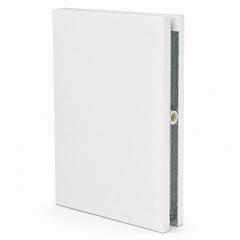
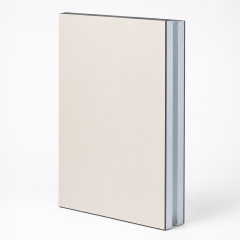
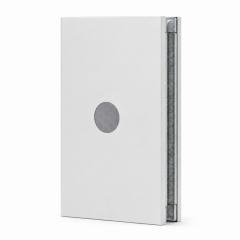
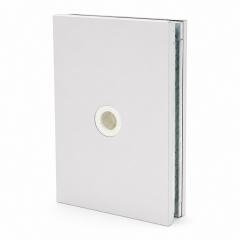
You turn it on every day.
The fan is running.
The indicator lights look normal.
But the real question is: how to know if an air purifier is actually working?
At Wonclean, we have spent years working deeply in the cleanroom industry. Evaluating air filtration performance is part of our daily routine. Whether in high-standard cleanrooms or ordinary indoor environments, the logic for determining whether air purification is truly effective is essentially the same.
This guide will explain it clearly, professionally, and without unnecessary complexity—so you can truly understand what’s happening with your air purifier.
An air purifier can be powered on and operating while its filtration performance has already significantly declined.
Filters are consumables. Once they approach saturation, airflow, filtration efficiency, and indoor air quality all decrease simultaneously. If you only check whether the unit is turned on, it’s easy to develop a false sense of security—and overlook potential pollution risks.
The most direct—and most often ignored—method is simply looking at the filter.
If you notice these signs, it’s time to seriously consider an air purifier filter change.
A properly functioning air purifier should maintain stable airflow.
Common warning signs include:
These usually mean the filter resistance has increased and the filter is near or at saturation.
Depending on your purifier’s configuration, watch for:
All of these are direct indicators of reduced purification efficiency.
In cleanroom systems, we rely on data rather than assumptions:
|
Test Method |
What It Indicates |
Meaning |
|
Differential pressure |
Filter resistance |
High values = clogging |
|
Particle counting |
Air cleanliness |
Exceeding limits = failure or leakage |
|
Air velocity testing |
Actual airflow |
Decrease = restricted filtration |
These methods are also applicable in professional air purifier service scenarios.
This is a high-search-volume question—and a critical one.
Typical reference intervals:
|
Filter Type |
Average Service Life |
|
Pre / primary filter |
3–6 months |
|
HEPA filter |
12–24 months |
|
Activated carbon filter |
3–6 months |
That’s why how often to change air purifier filters has no single correct answer.
A reasonable decision should consider usage time, environmental pollution levels, and operating load.
If you’re wondering how long do air purifier filters last, remember this:
The environment determines filter life—not the calendar.
Filter lifespan is often shortened significantly in these conditions:
For industrial settings or used air purifiers, professional testing before continued use is strongly recommended.
If you’re still asking how to know if an air purifier is working, don’t rely solely on surface indicators like sound, lights, or whether air is blowing.
The real criteria are whether the output air is truly clean, whether airflow remains stable over time, and whether filters are replaced within a reasonable service cycle.
Only when filters are treated as critical air-safety components—not optional accessories—can an air purifier truly deliver the protection it’s designed to provide.

 Room JT30151, Building 4, Area B, No. 925 Yecheng Road, Industrial Zone, Shanghai,China
 Info@wonclean.com
Allen@wonclean.com
Joy@wonclean.com
Info@wonclean.com
Allen@wonclean.com
Joy@wonclean.com
 +86 13671979988(Allen)+86 15950938878(Joy)


 online service

