What are you looking for?
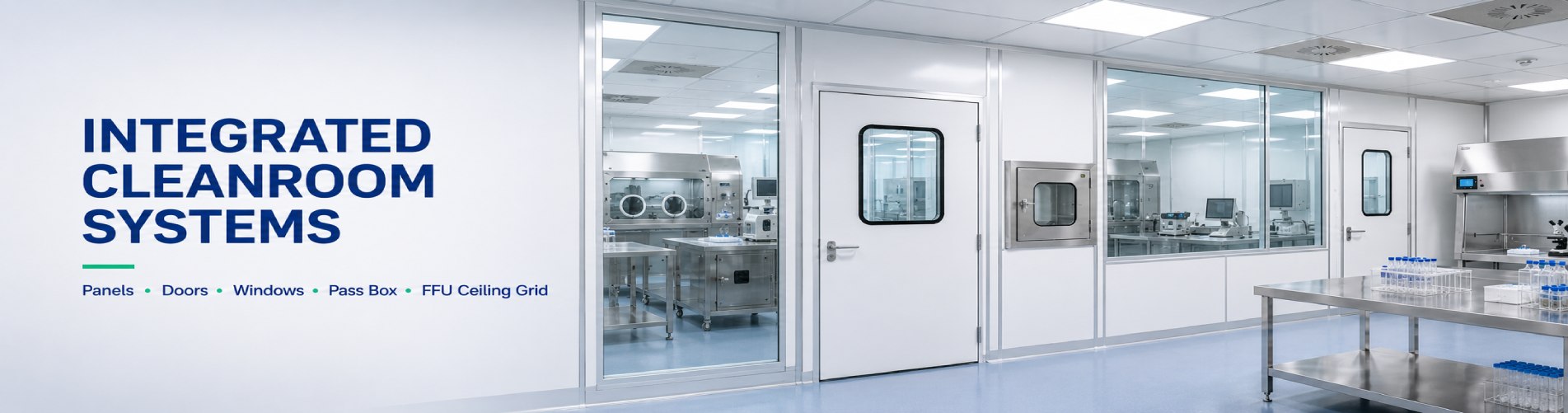


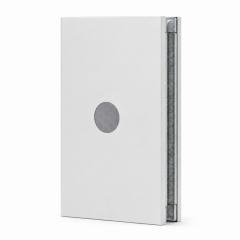
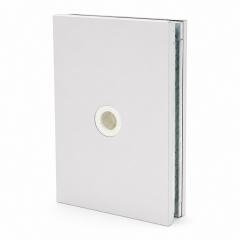
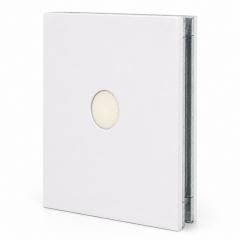
2026 Technical Guide: Strategic evaluation of clean room construction quality using high-performance FFU systems and chemical-resistant HPL sandwich panels.
In the advanced manufacturing landscape of 2026, a Clean room is defined as a high-precision ecosystem that regulates particles, bacteria, and indoor pressure regardless of external fluctuations. Establishing a certified ffu clean room requires the strategic integration of aerospace-grade cleanroom ceiling panels and high-density HPL sandwich panel technology. Achieving "Sterile Integrity" involves a rigorous evaluation of air distribution and particle counter sensitivity to ensure data traceability in pharmaceutical and semiconductor sectors.
The strategic evaluation of construction quality hinges on precise measurement protocols. In 2026, the industry standard has shifted toward "Iso-kinetic Sampling" to prevent turbulence-induced inaccuracies during cleanliness verification.
| Measurement Parameter | 2026 Industry Standard (WONCLEAN) | Engineering Value |
|---|---|---|
| Particle Sensitivity | 0.3μm (Calibrated) | Ensures Fine Contaminant Detection |
| Measurement Cycle | > 2 Minutes per Point | Minimizes Air Disturbance Noise |
| Surface Inertness | High-Density HPL Composite | Resists Aggressive VHP Sterilization |
| Pressure Differential | Intelligent 15-50 Pa Gradient | Prevents External Contamination Ingress |
Dust Particle Counter Calibration: Any counter used must possess a particle size sensitivity of 0.3μm. Pre-test calibration is mandatory to ensure that indoor measurement personnel—limited to 3 stationary individuals—do not interfere with the sterile baseline.
Sampling Point Distribution: The minimum number of sampling points follows a strict formula where area dictates density. For a high-performance ffu clean room, one-way laminar flow is measured across the air supply surface, while turbulent flow is assessed across the room's entire floor area.
Isokinetic Sampling Port Orientation: In one-way flow rooms, the sampling port must face the airflow directly. In turbulent rooms, the port faces upward. This ensures the sampling speed is perfectly matched to indoor airflow velocity, eliminating measurement drift.
Laminar Barrier Testing: For one-way flow systems, particle counts must be debugged on the working surface at a distance of 0.6m from the door while it is open, verifying if the cleanroom ceiling panels and air curtain can maintain pressure against external infiltration.
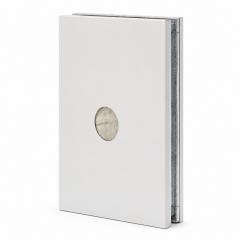
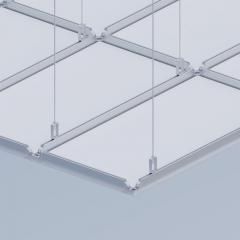
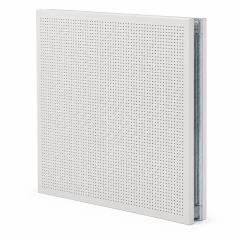
The structural integrity of a clean room depends on the synergy between air moving components and the envelope. By utilizing a high-density HPL sandwich panel, facilities gain 300% higher impact resistance than standard metal panels, while cleanroom ceiling panels provide the airtight seal necessary for maintaining precise pressure differentials in sterile labs.
A: 0.3μm is the most penetrating particle size (MPPS). Ensuring sensitivity at this level guarantees that the H14/U15 filtration in your ffu clean room is operating at peak efficiency.
Q: How do HPL sandwich panels impact cleanliness testing?A: HPL sandwich panels are non-porous and chemically inert. During testing, they do not shed micro-particles or outgas, ensuring that the particle counter readings reflect only airborne contaminants, not material degradation.
Q: What is the primary trend in cleanroom ceiling design?A: The move toward "Smart Grid" cleanroom ceiling panels that integrate real-time airflow sensors and automated FFU controllers to maintain constant cleanliness levels under varying occupancy.

 Room JT30151, Building 4, Area B, No. 925 Yecheng Road, Industrial Zone, Shanghai,China
 Info@wonclean.com
Allen@wonclean.com
Joy@wonclean.com
Info@wonclean.com
Allen@wonclean.com
Joy@wonclean.com
 +86 13671979988(Allen)+86 15950938878(Joy)


 online service

