What are you looking for?
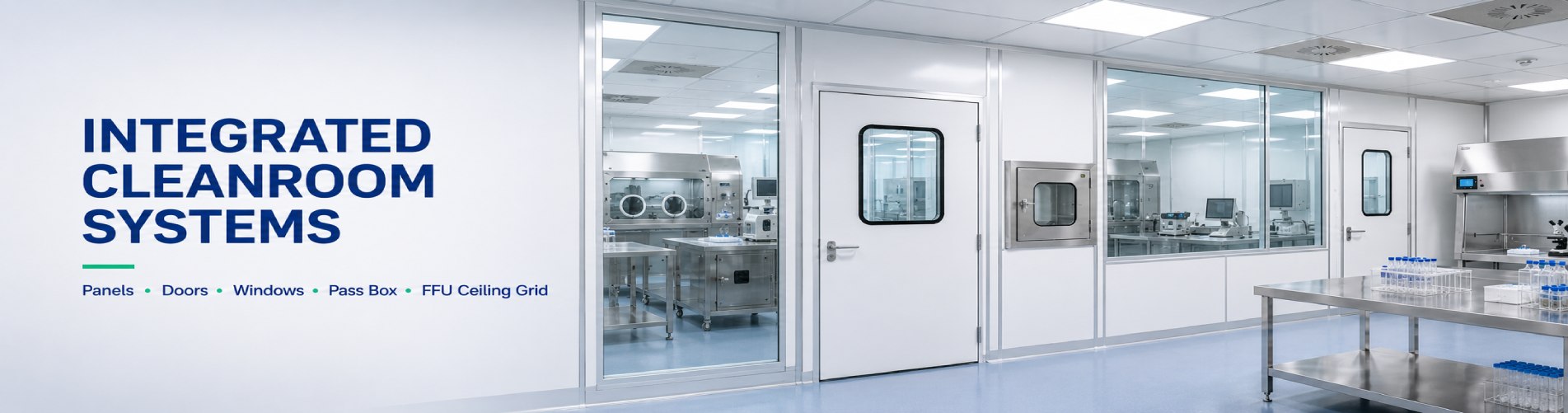


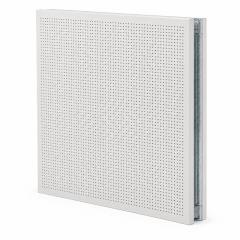


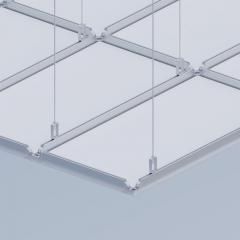
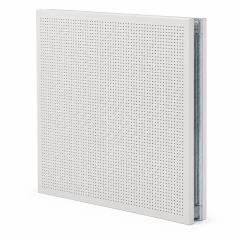
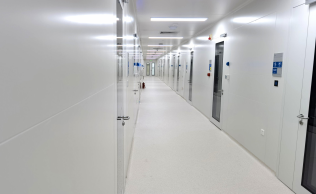
Technical Analysis | Semiconductor Cleanroom Ceilings Controlling AMC and Static in Semiconductor Cleanroom Ceilings Semiconductor cleanrooms are not controlled by particle class alone. Airborne molecular contamination and electrostatic discharge can both originate in the ceiling zone, where FFUs, chemical filters, aluminium ceiling grids, sealants, lighting, access panels and maintenance activity interact with ultra-sensitive process environments. cleanroom ceiling walkable ceiling FFU ceiling grid aluminium ceilings AMCMolecular acids, bases, organics and dopants. StaticESD risk from surfaces, airflow and maintenance. CeilingFFUs, grids, panels, gaskets and access points. ControlMaterials, filtration, grounding and monitoring. A semiconductor ceiling system should be specified as a contamination-control platform, not only as a mechanical support grid. The ceiling must distribute clean air, carry FFUs and filter modules, limit molecular outgassing, provide safe maintenance access and maintain a continuous grounding strategy for electrostatic control. Ceiling as a contamination-control platform. Semiconductor facilities need ceiling systems that support air delivery, service access, cleanable surfaces and low-risk material choices. Why It Matters Particles Are Only One Part of Semiconductor Cleanroom Risk ISO 14644-1 particle classification is essential for semiconductor manufacturing, but advanced lithography, deposition, etching, metrology and wafer handling also respond to molecular-level contamination and electrical charge. A room can pass particle classification and still create yield risk if acids, bases, condensable organics, dopant compounds or charge-generating surfaces are not managed. The ceiling zone is a critical interface because it combines airflow, filtration, sealing, lighting, cable routing, access panels and maintenance activity. Any poorly selected coating, gasket, adhesive, cable jacket or sealant can become an AMC source. Any isolated metal frame or high-resistance surface can become part of a static-control problem. AMC Definition AMC Control Starts with Classification and Source Mapping Airborne molecular contamination, often abbreviated as AMC, refers to chemical contaminants in the air rather than particles alone. ISO 14644-8:2022 addresses air chemical cleanliness by chemical concentration, while SEMI F21 is used in semiconductor environments for airborne molecular contaminant level classification. In semiconductor environments, typical AMC groups include acidic compounds, basic compounds, condensable organics and dopant or metal-related species. These contaminants can interact with wafers, photoresist, optics, reticles, sensors and process chemistry. For ceiling design, the first step is to map where molecular contaminants may enter or form: make-up air, process exhaust backflow, construction materials, ceiling panels, sealants, filters, maintenance solvents, cable trays and plenum components. Once the source map is cl...
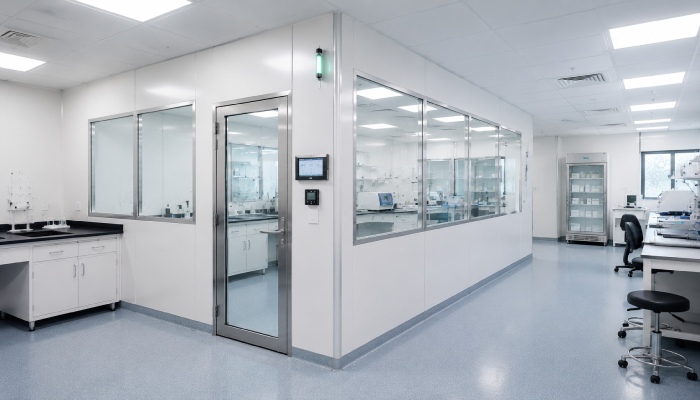
Technical Analysis | Portable and Container Cleanrooms Rapid-Deployment Cleanrooms for Biopharma: Portable Clean Rooms and Container Laboratory Solutions Biopharma companies sometimes need controlled cleanroom capacity before a permanent facility can be expanded. A portable clean room or container laboratory can help, but rapid deployment must be treated as an engineering strategy, not as a shortcut. portable clean room container laboratory modular laboratory Fast setupPrefabricated envelope and interfaces. ISO classParticle classification still required. HVACAirflow, filtration and pressure control. Site proofFinal testing after installation. A rapid-deployment cleanroom still needs the same fundamentals as any serious biopharma cleanroom: defined ISO classification, cleanable surfaces, controlled airflow, pressure cascade, filtration, temperature and humidity control, utility planning, personnel and material flow, and documented verification after installation. Rapid deployment begins before the site. Export packing and direct-to-container loading protect cleanroom components so installation can start quickly after delivery. Core Principle Rapid Deployment Solves Capacity, Not Compliance Portable does not mean informal. A portable clean room may be assembled faster than a conventional cleanroom, and a container laboratory may arrive with much of the envelope already built. The room must still match the risk of the process it supports. Common applications include QC testing, microbiology support, sampling, small-batch preparation, clean storage, gowning overflow, regional laboratory deployment and temporary capacity during facility upgrades. Format Selection Portable Clean Room, Container Laboratory or Transportable Cleanroom? The terms often overlap, but the engineering choices are different. A portable clean room is usually used inside or near an existing facility. A container laboratory is a more independent module built inside a transportable shell, often with integrated cleanroom lining, HVAC interfaces and service zones. The right choice depends on independence, available utilities, relocation plans, process risk, room size and schedule. The better option is the one that can be installed, connected, cleaned, tested and documented with the least uncertainty. Practical differences between rapid-deployment cleanroom formats. Format Best fit Main design focus Portable clean room Temporary classified space, internal facility expansion, renovation support. Fast assembly, cleanable envelope, host-building interface and local HVAC control. Container laboratory Independent laboratory capacity, regional testing, outdoor or semi-independent deployment. Transportable shell, insulated cleanroom lining, HVAC platform, utilities and logistics protection. Transportable suite Repeat deployment, multi-module workflows, scalable cleanroom layouts. Module-to-module sealing, standardized interfaces and repeatable qualification logic. Container lab interior. Se...
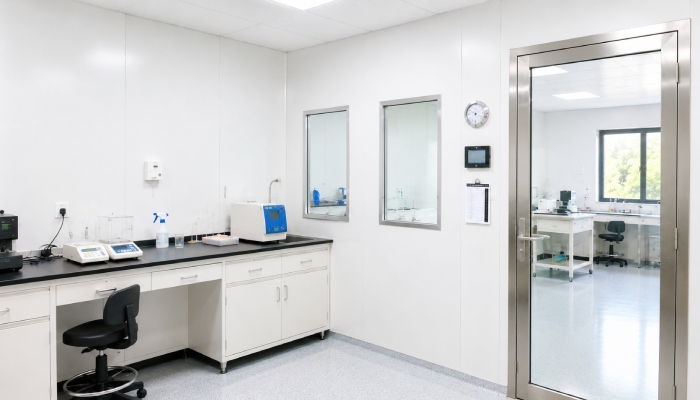
Technical Analysis | Modular Biopharma Labs Modular Labs for North American Biopharma: Aligning with FDA and ISO 14644 North American biopharma teams need cleanroom capacity that can be delivered faster without weakening contamination control. A modular laboratory can help when the room is engineered as a complete cleanroom system: envelope, HVAC, pressure cascade, personnel flow, material transfer and qualification evidence. modular clean room modular laboratory cleanroom wall panels ISO 14644Particle classification baseline. FDA cGMPFacility and air-handling context. HVACAirflow, pressure and recovery. IQ/OQEvidence planned before fabrication. For Wonclean, the value of modular cleanroom construction is not only speed. It is repeatability. When wall panels, ceilings, doors, pass boxes, air showers and service interfaces are coordinated before site work begins, the project team can reduce field uncertainty and create a cleaner route toward commissioning and qualification. Factory-built envelope. Modular cleanroom elements can be coordinated before arriving at the biopharma site, reducing uncontrolled field work. Capacity Strategy Why North American Biopharma Is Moving Lab Capacity Off the Construction Path Traditional cleanroom projects often depend on long building schedules, many site trades, dust control, access restrictions and late utility changes. Modular construction moves more work into a controlled fabrication environment. This is useful for clinical manufacturing support, quality control laboratories, microbiology suites, sampling rooms, gowning areas and clean storage spaces that must be delivered without disturbing existing operations. The goal is not to avoid compliance. The goal is to make compliance easier to organize. A well-planned modular lab gives owners a clearer design baseline: defined ISO targets, cleanable materials, pressure relationships, HVAC strategy, monitoring points, personnel and material routes, and evidence that can be reviewed before the room reaches the site. Standards Logic ISO 14644 Defines the Room; FDA Defines the Quality System Around It ISO 14644-1 classifies cleanrooms by airborne particle concentration. In practice, the project must define the target ISO class, test locations, occupancy state and acceptance criteria. For biopharma, that is only one part of the quality picture. FDA current good manufacturing practice expectations also require suitable facilities, air handling, equipment, procedures and contamination-control practices. A modular biopharma lab should therefore be specified around both the physical cleanroom and the operating quality system. ISO classification answers whether the room can meet a particle concentration limit under defined conditions. FDA-oriented facility thinking asks whether the room, HVAC, pressure cascade, cleaning access, monitoring and documentation support the intended operation. Core design questions for a modular biopharma cleanroom. Design question Why it matters ...
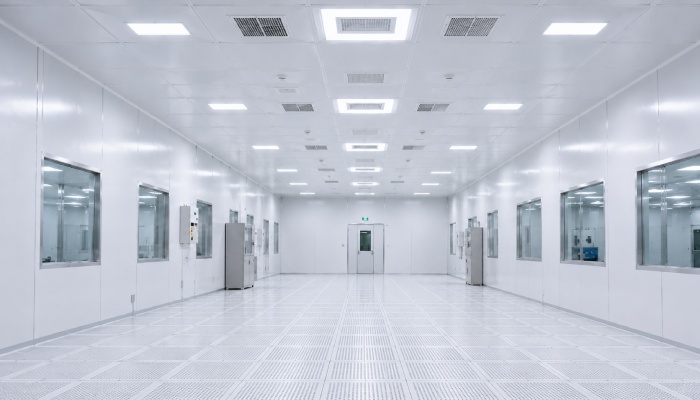
Home› Technical› Achieving ISO Class 5 with Modular Construction Technical Analysis · Semiconductor Cleanrooms Achieving ISO Class 5 with Modular Construction: A Semiconductor Cleanroom Approach Can a cleanroom that is built in a factory and assembled on site really hit the cleanliness a semiconductor process demands? This is a technical look at how a modular clean room reaches — and holds — ISO Class 5. Topics modular clean room portable cleanroom prefabricated clean room ≤3,520 / m³ Max particles ≥0.5 µm allowed at ISO Class 5 Unidirectional The airflow regime ISO 5 requires Factory-built Sealing and QC done under controlled conditions Weeks Typical site time versus months for stick-built By the Wonclean technical team Updated June 2026 ~7 min read There is a lingering assumption that “modular” means “lower spec” — fine for a workshop or a softwall enclosure, but not for the clean end of semiconductor work. In practice the opposite is true: the qualities that define ISO Class 5 — airtight sealing, precise airflow, controlled surfaces — are exactly the things a factory-built, prefabricated system can deliver more consistently than a build assembled in the open. This article sets out what ISO Class 5 actually requires, why modular construction is well suited to meeting it, and how a semiconductor-grade modular clean room is put together to reach and hold that standard. Modular, not compromised. A high-classification cleanroom built from a modular envelope — a continuous filter-and-light ceiling, sealed wall panels and a controlled floor, delivered as one engineered system. 01 — The target What ISO Class 5 actually demands ISO Class 5, defined by ISO 14644-1 and equivalent to the older “Class 100” and to EU GMP Grade A/B, allows no more than 3,520 particles of 0.5 µm or larger per cubic metre — around a thousand times cleaner than ordinary indoor air. Hitting that number is not about one heroic component; it is about four things working together: Unidirectional airflow. A near-continuous sheet of filtered air moving top-to-bottom, so particles are swept away from the work plane rather than mixed around the room. High filter coverage and air change. A ceiling largely filled with HEPA or ULPA filters, delivering a high, steady air-change rate. An airtight envelope. Walls, ceiling and joints sealed so unfiltered air cannot leak in and the pressure cascade holds. Controlled surfaces. Smooth, non-shedding, cleanable materials throughout, with no dust-collecting corners. Every one of these is a property of how precisely the room is built and sealed — which is where construction method starts to matter. 02 — The case for modular Why prefabrication suits high-classification cleanrooms Traditional “stick-built” construction assembles a cleanroom in place, trade by trade, often in a dusty, weather-exposed shell. A modular clean room inverts that: the panels, ceiling system, filters and services are manufactured to precise tolerances in a factory and as...
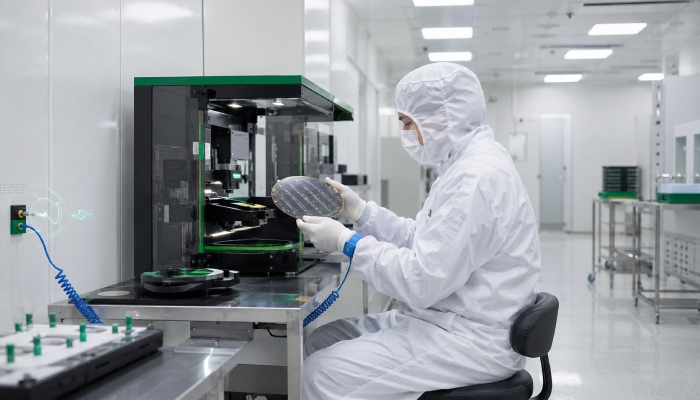
Home› Technical› ESD Control in Electronics Cleanrooms Technical Analysis · Electronics Cleanrooms ESD Control in Electronics Cleanrooms: Choosing Antistatic Wall and Sandwich Panels In electronics manufacturing, a charge you cannot feel can destroy a device you cannot see. This is a technical look at how the cleanroom envelope — its walls and panels — becomes part of the electrostatic-discharge control strategy. Topics cleanroom panels sandwich panel clean room walls <100 V Damage threshold for many modern semiconductor devices 10⁶–10⁹ Ω Typical static-dissipative surface-resistance window Two risks Device damage and particle attraction One path Every surface bonded to a common ground By the Wonclean technical team Updated June 2026 ~7 min read Electronics and semiconductor production is uniquely vulnerable to something invisible: static electricity. A static-discharge event far below the level a person can perceive can degrade or destroy a sensitive component, and a charged surface quietly pulls airborne particles toward the very products a cleanroom exists to protect. Controlling that charge is not only a matter of wrist straps and flooring — the walls themselves are part of the system. This article looks at why electrostatic discharge (ESD) matters so much in electronics cleanrooms, how surface behaviour is classified, and how to specify antistatic cleanroom wall and sandwich panels that contribute to control rather than working against it. The envelope is part of the system. Smooth, sealed cleanroom wall panels in an electronics environment — the large surfaces that surround sensitive work must dissipate charge, not store it. 01 — The core problem Why static is a double threat in electronics cleanrooms Static causes two distinct problems, and an electronics cleanroom has to solve both at once. The first is electrostatic discharge damage. Modern integrated circuits, sensors and printed assemblies operate at tiny voltages and feature geometries measured in nanometres. A sudden discharge — from a person, a tool or a charged surface — can puncture insulation layers or fuse conductors. Many devices are damaged by events under 100 volts, well below the roughly 2,000 volts a person needs before they feel a shock. The damage is often latent: the part survives the line and fails in the field. The second problem is electrostatic attraction. A charged surface acts like a magnet for airborne particles, pulling them out of the airflow and holding them where they can settle on a wafer or board. In a room engineered to keep particles moving and away from the product, a charged wall does the opposite. Both problems point to the same requirement: surfaces should let charge bleed away to ground in a controlled way, instead of building it up. 02 — The science Conductive, dissipative, insulative: what the numbers mean ESD behaviour is described by surface resistance, measured in ohms and grouped into bands by standards such as IEC 61340-5-1 an...
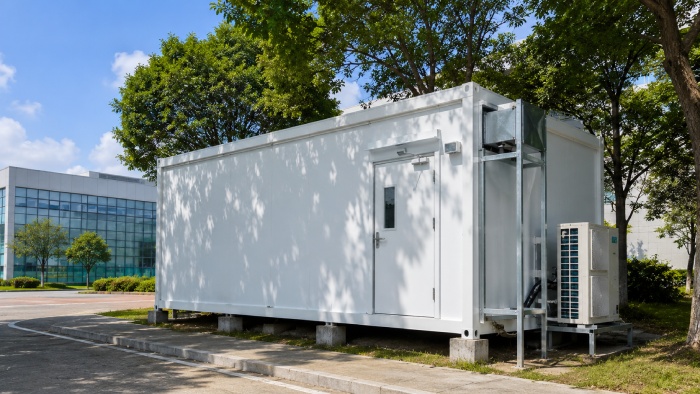
Home› Project Cases› Chinese Academy of Sciences Research Campus, Shanghai Project Case Study · Scientific Research Chinese Academy of Sciences Research Campus, Shanghai: A Modular Cleanroom & Laboratory Build How Wonclean delivered two complementary builds for one Shanghai research campus — a multi-floor indoor cleanroom and animal-barrier fit-out, and a plug-and-play, ark-style outdoor modular laboratory dropped into a wooded site with no building foundation. modular cleanroom clean room laboratory modular laboratory Shanghai Zhangjiang, Pudong — China 2 buildings South Buildings 1 & 2, multi-floor fit-out Indoor + outdoor Cleanroom fit-out plus a mobile modular lab 2024 Materials and modular unit by Wonclean By the Wonclean project team Published June 2026 ~9 min read When a leading Chinese Academy of Sciences research campus in Shanghai needed to expand its laboratory capacity, it faced two very different problems at once: how to upgrade demanding research and animal-barrier space inside an operating building, and how to add a fully functional laboratory outdoors, on a wooded plot with no building to put it in. Wonclean supplied both — the cleanroom envelope for the indoor floors, and a self-contained, ark-style modular laboratory for the outdoor site. This case study walks through the brief, the constraints, and the engineering decisions behind each part of the project, and why a modular approach fit a working scientific campus so well. A laboratory placed, not poured. The ark-style modular laboratory after installation — a complete clean envelope set down among the campus’s mature trees, with no permanent building required. Project snapshot At a glance Client A Chinese Academy of Sciences research institute, Shanghai (incl. the USTC Shanghai Research Institute on the same campus) Location Zhangjiang, Pudong New Area, Shanghai, China Sector Scientific research & life sciences, including a laboratory-animal (barrier) facility Scope Indoor cleanroom & barrier fit-out across South Buildings 1 & 2 (multiple floors) plus one outdoor ark-style modular laboratory Wonclean supply Cleanroom wall panels, cleanroom doors, cleanroom fire doors, fire windows, and a complete modular laboratory unit Approach Prefabricated, modular construction for minimal on-site disruption and fast deployment 01 — The brief One campus, two very different needs Research campuses rarely grow in tidy, planned steps. This one needed to solve two requirements in parallel. Inside its South Buildings, several floors had to be converted into controlled research environments — including an upper-floor laboratory-animal facility, which carries some of the strictest contamination-control and finish requirements of any laboratory type. At the same time, the campus needed additional, independent laboratory space quickly, and the only available ground was a tree-shaded plot with no structure on it. A conventional answer — pour a new building for the outdoor space, a...

 Room JT30151, Building 4, Area B, No. 925 Yecheng Road, Industrial Zone, Shanghai,China
 Info@wonclean.com
Allen@wonclean.com
Joy@wonclean.com
Info@wonclean.com
Allen@wonclean.com
Joy@wonclean.com
 +86 13671979988(Allen)+86 15950938878(Joy)


 online service

