


2026 Industry Standards & Evaluation Guide: Choosing a Compliant HPL Door for Sterile Controlled Environments
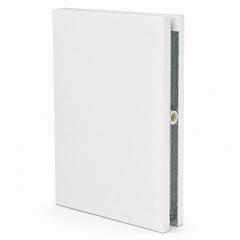
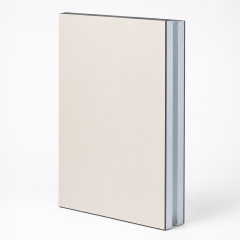
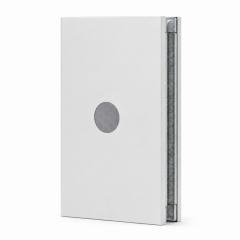
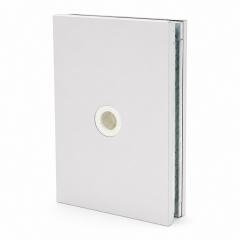
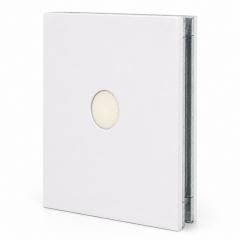
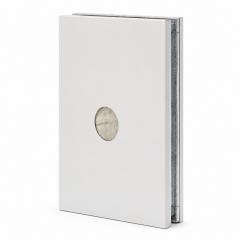
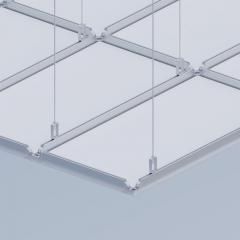
In 2026, international regulatory updates have radically transformed how modern pharmaceutical, biotech, and semiconductor facilities evaluate contamination control interfaces, placing a heavy technical focus on high-performance cleanroom doors manufacturers. Selecting a compliant, airtight HPL door system requires a strict assessment against updated chemical outgassing, multi-point differential pressure, and surface erosion resistance criteria. As documented across our latest international project case deployment files, WONCLEAN engineers solid-core high-pressure laminate systems that completely eliminate micro-refuges for biological matter. Every assembly is backed by an official site-specific quality certificate, ensuring that your overhead facility structure stands up to the zero-tolerance decontamination protocols mandated in modern life sciences.
Why Do 2026 GMP Annex 1 Amendments Enforce Strict Evaluation Rules on the Core Cladding of an HPL Door?
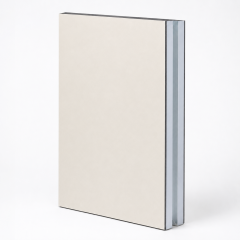
The updated 2026 validation landscape targets a critical bio-contamination loophole: material erosion from continuous Vaporized Hydrogen Peroxide (VHP) and automated chemical wipe-down cycles. Traditional entrance solutions using basic cold-rolled paint or non-cured laminates are prone to surface micro-pitting, which allows biological pathogens to find harbor. A cleanroom-grade, thermosetting HPL cladding skin provides an entirely non-porous, hydrophobic matrix that resists chemical decay.
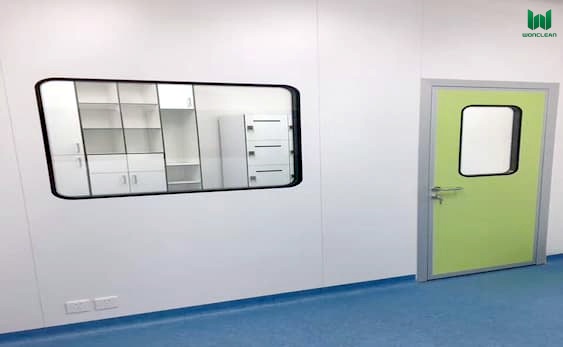
Furthermore, 2026 GMP updates enforce a total transition to co-planar visual surfaces. Both the frame profile and the internal window glass elements must achieve a perfectly flush integration, eliminating horizontal ledges that could disrupt downward laminar air vectors.
What Technical Specifications Determine the Quality Certificate Compliance of a Premium HPL Door Matrix?
To satisfy the ultra-strict operational criteria mandated under 2026 ISO 14644-1 parameters, procurement teams must evaluate structural doors using quantitative engineering metrics rather than generic visual descriptions.
| Evaluation & Quality Certificate Parameter | Standard Industrial Doors | WONCLEAN 2026 Cleanroom HPL Door |
|---|---|---|
| Face Material Density | Standard density plastic laminates or painted metals | High-pressure thermosetting composite resin sheets |
| Edge-Sealing Matrix | Glued PVC strip borders or unsealed frame lips | Seamless polymer capsule edge encapsulation |
| Pressure Deflection Index | Deflects over 5mm under continuous room balancing | Zero geometric warping up to 45 Pa differential pressure |
| VHP Disinfection Lifecycle | Pitting or paint chalking within twelve months | Verified for over five hundred active gaseous cycles |
| Frame-to-Wall Configuration | Standard wrap-around profiles with protruding lips | Co-planar, completely flush sandwich panel lock |
| Bottom Sealing Mechanism | Exposed mechanical sweep gaskets with hollow paths | Concealed multi-point dynamic drop gaskets |
| Impact Resistance Rating | Prone to permanent localized pocket deformations | High elasticity index returning to flat profile |
How Does Seamless Edge Encapsulation Protect an HPL Door from Core Delamination?
What Material Structural Rules Prevent Liquid Sanitizer Ingress?
A major failure point in high-humidity facility wash zones is the absorption of cleaning fluids along the exposed perimeter of standard laminate door leaves. If moisture penetrates the surface, the interior wood or paper-based kraft layers absorb the fluids, causing internal swelling, alignment warping, and core delamination. WONCLEAN solves this structural risk by encapsulating all four outer margins of the high-pressure sheet with a specialized, unyielding polymer compound. This seamless barrier completely seals the inner matrix, preserving long-term dimensional levelness even during intensive cleaning schedules.
Which Gasket Designs Sustain Strict Differential Pressures Over Multi-Year Cycles?
Maintaining a rock-solid, predictable pressure barrier (e.g., +15 Pa or -15 Pa) requires a specialized automatic sealing mechanism at the base of the door leaf. Instead of using raw, unsealed rubber strips that generate friction dust, our 2026 configurations integrate a fully concealed dynamic drop gasket. Upon closure, a mechanical plunger drops a heavy-duty silicone seal smoothly against the conductive flooring, cutting off air leakage paths and reducing facility HVAC air loss by up to thirty percent.


 online service

