What are you looking for?

Technical Planning Guide | Medical Device Clean Lab
Medical device manufacturing often needs a controlled clean lab that is smaller, faster and more flexible than a full conventional plant. A modular clean lab can support pilot production, assembly, inspection, packaging or process development, but only when ISO class, airflow, ACH assumptions and clean-zone boundaries are planned as one technical system.
modular clean lab medical device cleanroom ISO cleanroom class ACH and airflow
| ISO ClassDefine the required airborne particle limit and occupancy state. | ACHUse air changes to size airflow, not to prove cleanliness alone. | ZonesSeparate assembly, inspection, transfer and support areas. | QMSKeep layout evidence aligned with device quality records. |
For medical device teams, the best modular clean lab is not simply a container with clean panels. It is a controlled space where product exposure, operator movement, particle sources, material transfer, cleaning method and quality documentation all point to the same risk-based design.
Risk-Based Planning
A modular clean lab for medical devices should begin with the device and the process: is the product open or packaged, dry or wet, sterile or non-sterile, implantable or external use, manually assembled or automated, inspected in-process or at final packaging? Each answer changes the clean-zone logic.
ISO 13485:2016 is the international quality management system standard for medical devices. It does not prescribe a cleanroom layout, but it reinforces the need for controlled production conditions, documented processes and risk-based quality planning. A clean lab layout should therefore be easy to explain in the device manufacturer's quality file.
For early design, define the product exposure steps, personnel count, equipment heat load, material entry, waste exit, cleaning method, monitoring points and batch or lot documentation before fixing the module footprint.
ISO Class and ACH
ISO 14644-1 classifies cleanrooms by airborne particle concentration. ACH can help estimate airflow volume, but it cannot prove ISO class by itself. A clean lab with high ACH can still perform poorly if return paths are blocked, operators create uncontrolled turbulence, filters leak or workbenches sit in dead zones.
ISO 14644-3 covers cleanroom test methods, including checks that help confirm airflow, pressure difference and installed filter system performance where specified. For modular clean labs, the design should make these checks practical after installation, not hidden behind inaccessible equipment panels.
| Planning item | Common mistake | Better approach |
|---|---|---|
| ISO class | Selecting ISO 7 or ISO 8 without defining the operating state. | Define as-built, at-rest or operational acceptance and particle limits. |
| ACH | Treating air changes as the only cleanliness target. | Use ACH with airflow pattern, return path, source control and testing. |
| Clean zones | Putting all activities in one open room. | Separate assembly, inspection, gowning, transfer and support functions. |
| Maintenance access | Hiding filters, dampers or sensors behind finished walls. | Plan service access without opening critical clean-zone surfaces. |
Clean-Zone Layout
Medical device clean labs often fail not because the room is too small, but because the workflow is compressed without control points. At minimum, the layout should distinguish gowning or entry, material receipt, clean storage, assembly, inspection, packaging support, waste exit and cleaning-tool storage.
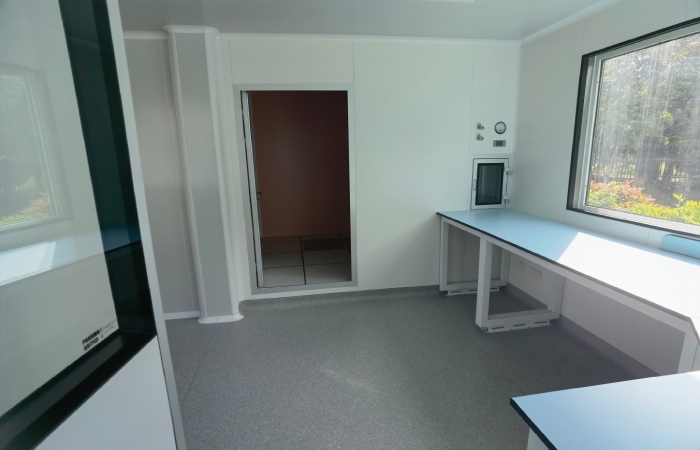
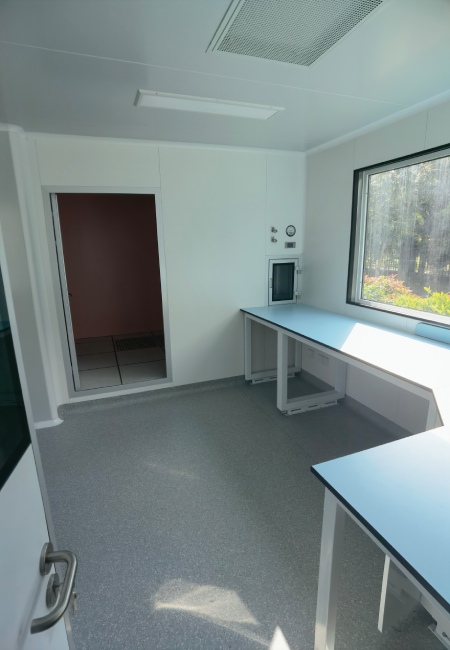
When a modular clean lab includes a pass-through, airlock or transfer hatch, the equipment should be placed where operators naturally use it. If the shortest path bypasses the transfer route, daily behavior will gradually defeat the clean-zone design. Door swing, table edges, carts and batch records all matter in a compact space.
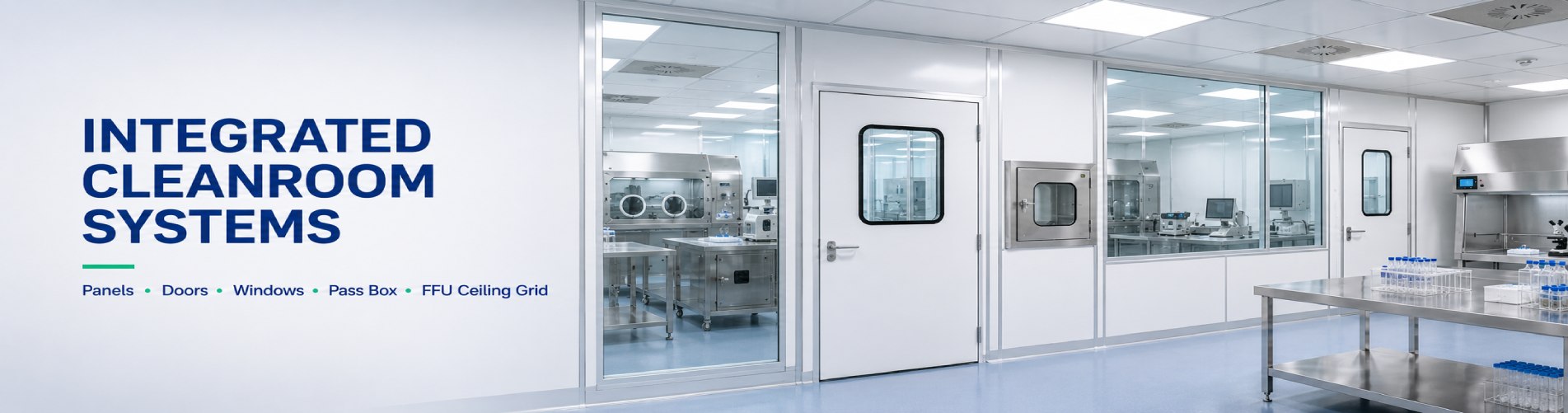
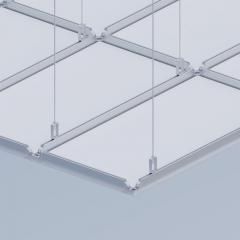
Wonclean modular clean labs can integrate wall panels, doors, windows, pass boxes, ceiling systems and fan filter units so the room layout supports real production movement instead of forcing operators to work around the cleanroom.
HVAC and Service Access
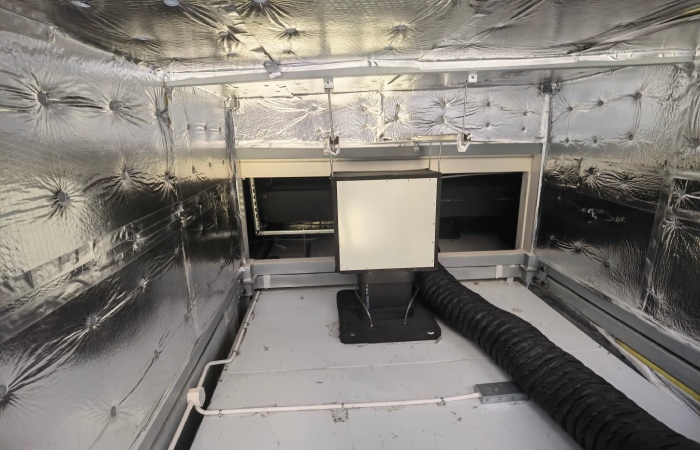
A modular clean lab is compact, so the HVAC service strategy is critical. Filters, fans, dampers, condensate routing, pressure tubing, alarms and electrical connections need access for inspection and maintenance. If every service action requires opening the production room, the clean lab will be harder to keep qualified.
ISO 14644-4 addresses cleanroom design, construction and start-up. In modular clean labs, this means the ceiling, service compartment and room envelope should be coordinated so airflow balancing, pressure checks and filter replacement can happen in a controlled sequence.
The design should also avoid oversizing airflow simply to compensate for leaks. Tight panels, sealed penetrations, controlled doors and clear return paths usually provide better stability than trying to solve every problem with higher ACH.
Quality System Context
For FDA-regulated devices in the United States, the FDA Quality Management System Regulation became effective on February 2, 2026 and incorporates ISO 13485:2016 by reference. This does not mean every medical device clean lab has the same ISO class, but it does make documented production controls and risk-based quality decisions more important.
A validation-ready modular clean lab package should include room layout, ISO class target, occupancy state, air handling concept, pressure map, material flow, cleaning method, monitoring locations, service access, panel and ceiling drawings, door schedule, equipment layout and installation inspection records.
For medical device manufacturers, these records help connect facility design to process validation, environmental monitoring, change control and supplier documentation.
Technical Fact Check
| Fact used | Source | Clean lab implication |
|---|---|---|
| Cleanroom class is based on airborne particle concentration, not ACH alone. | ISO 14644-1 | ISO class planning must include particle verification under a defined state. |
| Cleanroom testing can include airflow, pressure difference and installed filter leakage methods. | ISO 14644-3 | Modular labs need accessible test and service points. |
| Cleanroom design, construction and start-up should be considered together. | ISO 14644-4 | Ceiling, HVAC access, wall panels and doors should be coordinated before fabrication. |
| ISO 13485 is the quality management system standard for medical devices. | ISO 13485:2016 | Clean lab decisions should be documented in a way that supports device QMS records. |
| FDA's QMSR became effective on February 2, 2026 and incorporates ISO 13485:2016 by reference. | FDA QMSR | Medical device clean labs should preserve clear evidence of controlled production conditions. |
Referenced Standards
FAQ
There is no single ISO class for all devices. The required class depends on product exposure, particle sensitivity, sterilization strategy, process risk, regulatory expectations and the manufacturer's quality system.
No. ACH is an airflow design input. Cleanroom performance must be verified by particle results, airflow behavior, filter installation quality, return path, pressure control and operating discipline.
Common zones include entry or gowning, material transfer, clean storage, assembly, inspection, packaging support, waste exit and service access. The exact zoning should follow the device process risk.
Yes, if layout, ISO class, airflow concept, materials, service access, cleaning method, monitoring locations and installation checks are documented clearly enough for the device quality system.
Wonclean Engineering Note
A modular clean lab can help medical device manufacturers add controlled capacity quickly, but the value depends on early engineering decisions. ISO class, ACH, clean zones, pressure control, panel interfaces, doors, pass-throughs and HVAC access should be fixed before fabrication, then verified after installation.
Useful Wonclean references: modular cleanroom, cleanroom wall system, cleanroom ceiling system, fan filter unit, cleanroom door, contact Wonclean.

 Room JT30151, Building 4, Area B, No. 925 Yecheng Road, Industrial Zone, Shanghai,China
 Info@wonclean.com
Allen@wonclean.com
Joy@wonclean.com
Info@wonclean.com
Allen@wonclean.com
Joy@wonclean.com
 +86 13671979988(Allen)+86 15950938878(Joy)


 online service

