
What Cleanroom Projects Can Teach Data Center Teams About Interface Evidence
Separate the outcomes, share the discipline
A cleanroom is assessed against the needs of its process; a data center is judged by the operating conditions and availability required for its equipment. The targets should not be treated as interchangeable. Both projects, however, have boundaries crossed by HVAC, power, controls, people and materials. Draw those crossings and assign an owner to each. A drawing that shows only the wall supplier scope cannot reveal how a cable opening will be closed after installation. An interface register gives the design team a place to settle the detail before the final trade reaches site.
Inspect what will be hidden

Cleanroom delivery often makes joint continuity and penetration closure visible to inspectors before finishes conceal them. The same discipline helps a data center enclosure. Identify hold points at base tracks, ceiling junctions, door frames and service openings. Record the installed condition with location references, not an undated album of attractive photographs. Where a boundary affects airflow management, compare the completed assembly with the cooling design. The test method should follow the project requirement; a cleanroom particle test is not automatically a meaningful test for a server hall. Evidence is valuable when it answers a specific acceptance question.
Make changes traceable
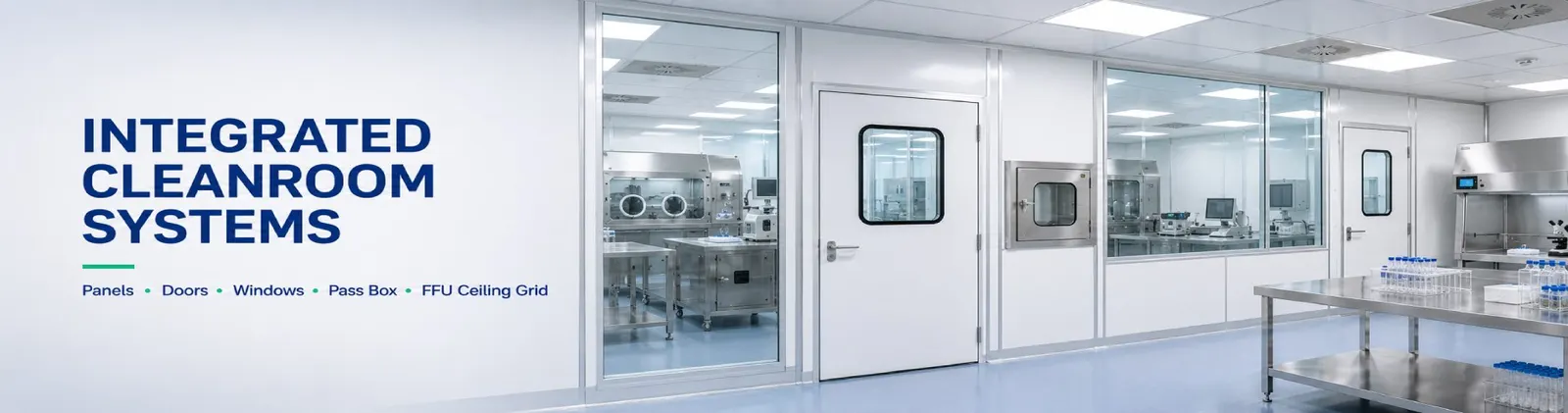
Operational changes can undo careful construction. A new cable, sensor or equipment route may create an unsealed opening or obstruct a maintenance path. Provide a controlled method for requesting, cutting, closing and inspecting such changes. Keep as-built drawings current and identify spare materials and compatible seal details. The operator should know which changes require a designer to review airflow, fire or access implications. A project with a clear alteration record is easier to maintain than one that depends on memories of the original installation team. A clean room partition system makes joint and opening details visible; cleanroom data center interfaces benefit from the same evidence discipline without sharing identical performance targets.
Decision record
The buyer can ask for three documents: an interface register, an inspection plan and a change log. Each should name locations, responsible parties and the evidence expected. Use them to compare suppliers and to close out disputes before handover. This lesson applies to modular construction as well as conventional work: repeatable components reduce variation, but every connection to an existing building needs a project-specific decision. The transferable practice is disciplined coordination, not a claim that the two facilities perform alike.
For both facility types, record exceptions explicitly. A joint left open for future work, a missing seal or an untested altered path is an exception with an owner and a closure date. Treating exceptions as visible project data prevents them from disappearing inside a broad statement that the room was handed over complete.