



How Can a Portable Clean Room Use Air Shower and Clean Room HEPA Filters for Faster ISO/GMP Deployment?
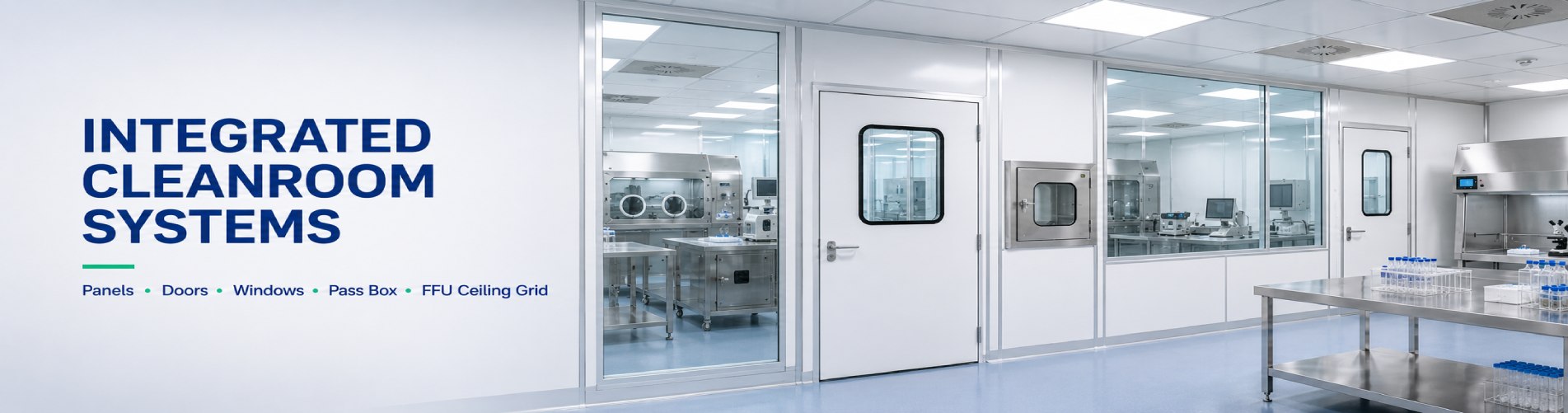
A fast ISO/GMP project cannot rely on room panels alone; it needs a coordinated contamination-control route from personnel entry to filtered airflow. Wonclean supports this approach by engineering a modular portable clean room layout with controlled air shower access and project-specific clean room HEPA filters integrated through FFU ceiling grids, wall panels, pass boxes, doors, and HVAC interfaces.
Why Are ISO/GMP Projects Moving Toward Portable Clean Room Deployment?
ISO/GMP projects are moving toward portable clean room deployment because many pharmaceutical, medical device, semiconductor, food, biotechnology, and precision instrument facilities need cleaner installation with less site disruption. Traditional on-site construction can extend schedules, generate dust, and create more variables before validation. A portable clean room strategy shifts more work into factory prefabrication, helping project teams shorten installation time while keeping key interfaces more predictable.
The technical goal is not simply to move a cleanroom faster; it is to preserve contamination control during transport, installation, and commissioning. The official ISO 14644 cleanroom classification framework classifies cleanrooms by airborne particle concentration, while GMP projects require practical control of personnel flow, material flow, cleaning access, and environmental stability. For a modular project, this means the cleanroom wall panel, FFU ceiling grid, HEPA filtration, air shower, pass box, and pressure cascade must be planned as one system.
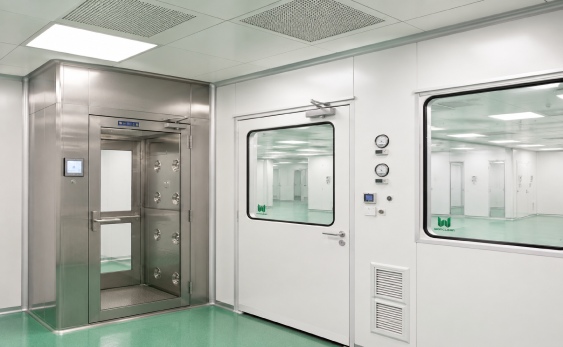
How Does an Air Shower Reduce Personnel-Borne Contamination?
An air shower reduces personnel-borne contamination by removing loose particles from garments before operators enter the controlled zone. In ISO Class 8 and GMP Grade C/D background areas, personnel movement is one of the most common contamination pathways, especially when operators enter from gowning rooms, corridors, or support areas. A properly positioned air shower helps create a controlled transition point before the cleaner production space.
Buyers should evaluate the air shower by airflow coverage, door interlock behavior, cycle time, nozzle position, internal cleanability, and connection to the cleanroom pressure cascade. The air shower should not be treated as a standalone box; it should coordinate with cleanroom doors, wall panels, flooring, return air, and personnel workflow. When the air shower is matched with the portable clean room layout, it helps reduce uncontrolled particle transfer during daily operation.
What Makes Clean Room HEPA Filters Critical for ISO Class 8 Performance?
Clean room HEPA filters are critical because they directly support particle removal, airflow stability, and room recovery performance. In a modular cleanroom, HEPA filtration is often coordinated through FFU units, terminal filter boxes, or ceiling-mounted filtration points. For ISO Class 8 projects, typical background air change rates may be planned around 15–30 ACH, while higher-grade local protection zones may require more intensive airflow depending on process risk.
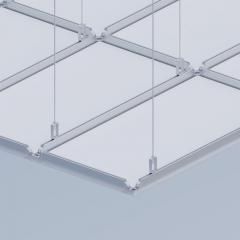
Filter performance also depends on how the ceiling system, blank panels, wall envelope, and HVAC balancing are installed. A cleanroom ceiling grid with 1200×1200 mm or 1200×600 mm FFU coordination can help organize filter positions, lighting, and ceiling blank panels. If HEPA modules are not sealed correctly at the ceiling interface, bypass leakage can reduce the practical value of filtration even when the filter itself is correctly specified.
How Do Cleanroom Ceiling Grid and Clean Room Sandwich Panel Systems Support Faster Installation?
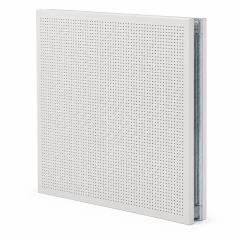
A cleanroom ceiling grid and clean room sandwich panel system support faster installation by turning the cleanroom envelope into a repeatable modular structure. For fast-deployment projects, the wall and ceiling system must carry filters, lights, doors, windows, pass boxes, and service interfaces without creating avoidable gaps. When these components are pre-coordinated, site teams can reduce cutting, rework, and installation dust.
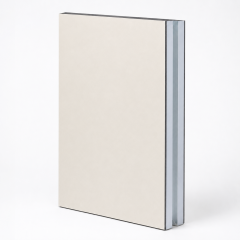
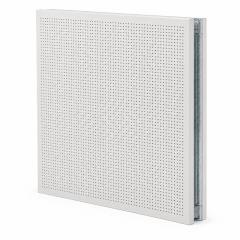
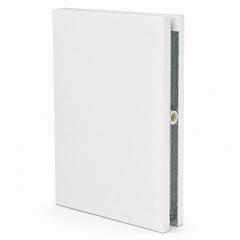
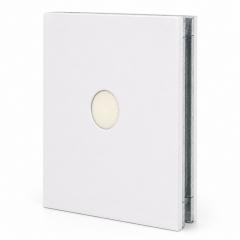
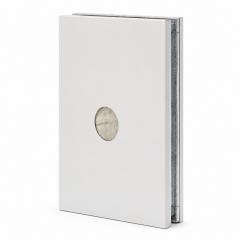
Clean room sandwich panel cores can be selected according to project risk and operating conditions. Rock wool and magnesium oxide cores are often considered where fire performance matters, aluminum honeycomb can support flatness and lightweight rigidity, and polyurethane can help thermal insulation where temperature control is important. For many ISO/GMP facilities, a stable operating range of 20–24°C and 45–60% relative humidity is used as a common design reference, but the final requirement should follow the process and validation plan.
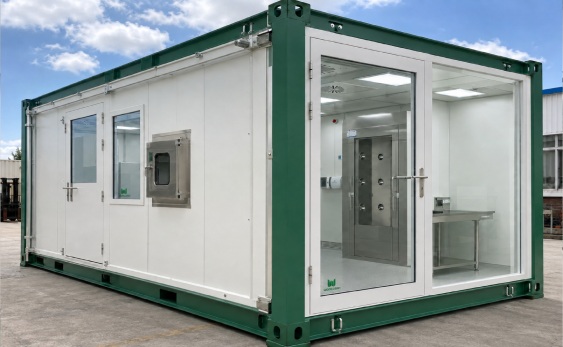
Which Portable Clean Room Scenarios Benefit from Container Laboratory Design?
Container laboratory design benefits projects that require outdoor placement, relocation, fast expansion, or long-distance delivery. A container-based modular laboratory can integrate structure, HVAC routing, electrical services, cleanroom wall panels, doors, windows, pass boxes, and filtration points before shipment. This is useful for regions where local construction labor is limited, installation windows are short, or production capacity must be deployed in phases.
For long-distance transport, the cleanroom structure must consider vibration resistance, lifting points, equipment fixation, panel protection, and site connection tolerances. A container laboratory does not remove the need for commissioning; instead, it helps reduce avoidable site variables before commissioning begins. When the modular system is planned correctly, it can support relocation demand, lower demolition waste, and faster future expansion.
What Technical Parameters Should Buyers Compare Before Deployment?
Buyers should compare portable clean room systems by contamination-control function, not by equipment names alone. The most useful evaluation connects each component to a measurable project outcome such as particle removal, pressure stability, installation speed, cleaning access, maintenance access, and validation readiness.
| System Component | Technical Function | Typical Specification | Project Benefit |
|---|---|---|---|
| Portable clean room | Fast controlled space | ISO Class 8 / GMP C-D | Shorter site work |
| Air shower | Personnel particle removal | Interlocked entry cycle | Cleaner access route |
| Clean room HEPA filters | Particle control | ISO 8: 15–30 ACH | Supports recovery |
| Ceiling grid and panels | Modular envelope | 1200×1200 / 1200×600 mm | Less field rework |
How Can Wonclean Reduce Dust, Labor Cost, and Schedule Pressure?
Wonclean can help reduce dust, labor cost, and schedule pressure by coordinating factory prefabrication with modular cleanroom engineering before the system reaches the jobsite. In a portable clean room project, wall panels, ceiling grid positions, FFU or HEPA filter locations, air shower interfaces, pass boxes, doors, windows, and digital monitoring points can be reviewed as one package. This reduces the risk of discovering major interface conflicts during installation.
For ISO Class 8 / GMP Grade B/C/D applications, the project team should confirm pressure cascade targets, often around 10–15 Pa between adjacent zones, together with temperature, humidity, airflow, personnel access, and material transfer routes. This integrated approach does not replace qualification work, but it helps project teams enter commissioning with fewer uncontrolled construction variables.
The Wonclean portable clean room package helped our team reduce installation dust, coordinate the air shower with HEPA-filtered ceiling modules, and prepare ISO Class 8 pressure balancing with fewer site modifications.
Project Engineering Manager, Modular Pharmaceutical Facility


 online service

