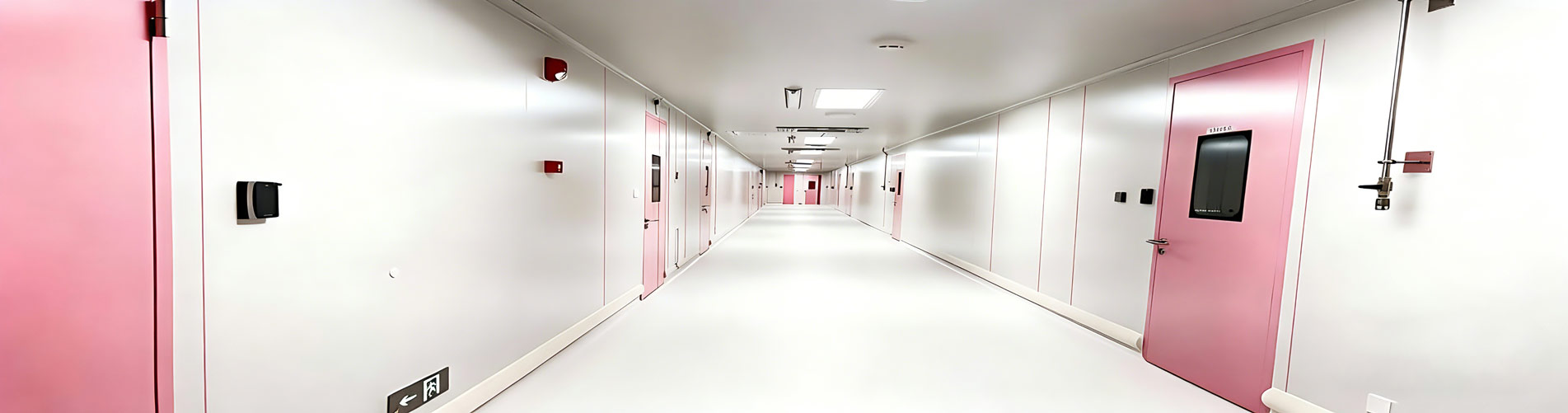
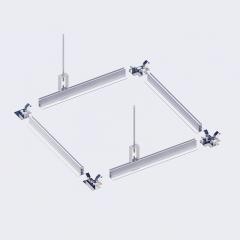
Master the 2026 engineering guide: How to optimize controlled environments with a bottom load ceiling grid for superior airtightness. Explore critical cleanroom ceiling requirements supported by professional M&A cleanroom services to achieve ISO compliance.
In the precision-driven world of controlled environments, your ceiling isn't just a cover—it’s a structural engine for contamination control. Whether you are managing an M&A cleanroom project or upgrading a biotech facility, selecting the right cleanroom ceiling grid is the difference between seamless compliance and costly downtime.
Meeting global ISO 14644-1 standards in 2026 requires a holistic approach where the cleanroom ceiling requirements prioritize airtight Gasketed Ceiling Grid technology to prevent particulate leakage while ensuring high structural rigidity for heavy-duty FFUs and cleanroom ceiling modules, all while maintaining full compatibility with cleanroom partition walls and chemical-resistant surfaces like Armstrong CLEAN ROOM VL tiles.
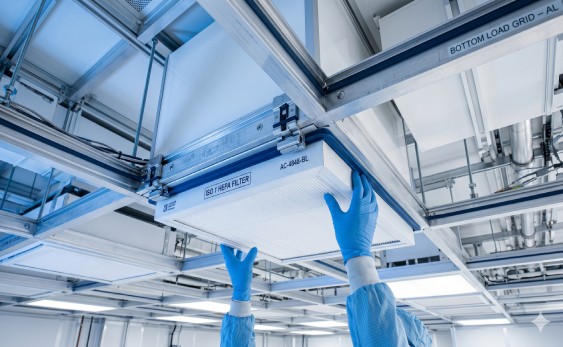
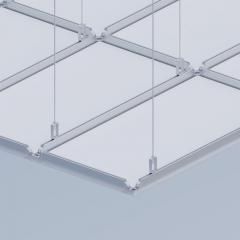
While top-load systems were once the industry standard, modern M&A cleanroom services increasingly recommend the bottom load ceiling grid. This system allows for the installation of filters and blank panels from inside the cleanroom, rather than from the plenum, which is critical for facilities like Data Centers with limited interstitial space.
| Key Feature | Bottom Load Ceiling Grid | Traditional Top Load |
|---|---|---|
| Primary Advantage | Easy maintenance from below | Lower initial material cost |
| Installation Side | Inside the Cleanroom | From the Plenum / Mezzanine |
| Application Best Fit | Data Centers & Pharma | General Manufacturing |
| Seal Integrity | Gasketed Ceiling Grid | Gravity or Fluid Seal |
A high-performance Clean Room Ceiling Grid is only as good as its installation. When vetting M&A cleanroom providers, focus on their ability to integrate the ceiling with other critical components like cleanroom partitions. Expert cleanroom installation ensures that the Grid System supports the dynamic loads of fan filter units without sagging.
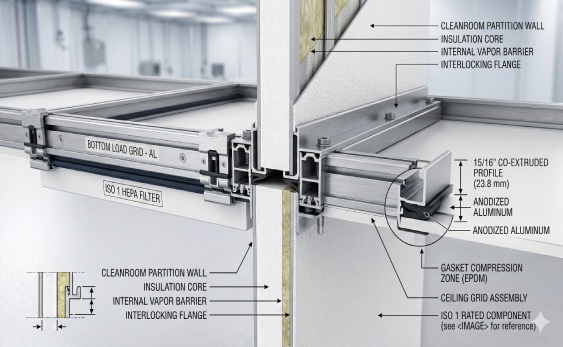
For facilities focused on specialized production, such as Clean Rooms Food Processing, the grid must be non-porous and capable of withstanding rigorous wash-down protocols. Choosing a Clean Room Ceiling System that utilizes an Armstrong Clean Room Suspension System ensures long-term durability and compliance with 2026 safety codes.
1. How much does a Clean Room Ceiling Grid Cost?
The clean room ceiling grid cost is determined by the material and the complexity of the Grid System. While bottom-load systems may have a higher initial price point, they significantly reduce long-term labor costs during cleanroom installation and filter replacements.
2. Can I use Armstrong CLEAN ROOM VL tiles with any grid?
While Armstrong CLEAN ROOM VL Ceiling Tiles are a market leader, they achieve maximum airtightness when paired with a compatible Gasketed Ceiling Grid. Using a 15/16" Co-Extruded CLEAN ROOM suspension ensures the tile sits flush, meeting strict cleanroom ceiling requirements.
3. What is the role of M&A cleanroom services in facility upgrades?
M&A cleanroom services specialize in the technical integration of modular components, such as linking a new Clean Room Ceiling Grid with existing cleanroom partitions. They provide the specialized cleanroom installation expertise needed to ensure the structural integrity of the entire environment.

 Room JT30151, Building 4, Area B, No. 925 Yecheng Road, Industrial Zone, Shanghai,China
 info@wonclean.com
Allen@wonclean.com
Joy@wonclean.com
info@wonclean.com
Allen@wonclean.com
Joy@wonclean.com
 +8613671979988(Allen)+86 15950938878(Joy)


 online service

