


2026 Cleanroom Doors Evaluation Guide: Strategic Engineering for Hospital & Lab Environments
In 2026, the selection of high-performance cleanroom doors is no longer just a structural choice—it is a critical component of infection control and radiation shielding. Modern facilities prioritize the cleanroom steel door for its robust structural integrity and seamless flush-mount design. For advanced medical imaging, an integrated interlock system ensures that pressure differentials remain constant, while the specialized cleanroom sliding door provides the necessary radiation isolation for CT rooms and high-traffic surgical corridors.
As an important place for medical imaging examinations, hospital CT rooms have extremely high requirements for environmental sealing and stability. Sliding doors have become the preferred door type for hospital CT rooms with their unique advantages. The opening method of sliding doors effectively avoids air convection; unlike traditional hinged doors that produce large air flows causing dust and bacteria spread, the door leaf moves along a track to maintain the cleanliness and stability of the CT room.
| Technical Property | 2026 Industry Standard | Strategic Rationale |
|---|---|---|
| Airtightness Class | Class 4 (EN 12207) | Prevents cross-contamination |
| Radiation Shielding | 2.0mm - 4.0mm Lead Equiv. | CT & X-Ray Safety Compliance |
| Cycle Durability | > 1,000,000 Openings | Reduces long-term maintenance costs |
| Interlock Response | < 0.5 Seconds | Instant pressure protection |
Advanced Interlock System & Sealing Performance
The sliding door has excellent sealing performance and can effectively isolate external noise and radiation. Hospital CT rooms need to provide patients with a quiet and comfortable examination environment, while also preventing radiation leakage. High-quality sealing strips fit tightly to the door frame to form a superior sealing effect. Furthermore, the large opening space provided by a professional cleanroom sliding door facilitates the transportation of large medical equipment, improving overall workflow efficiency.
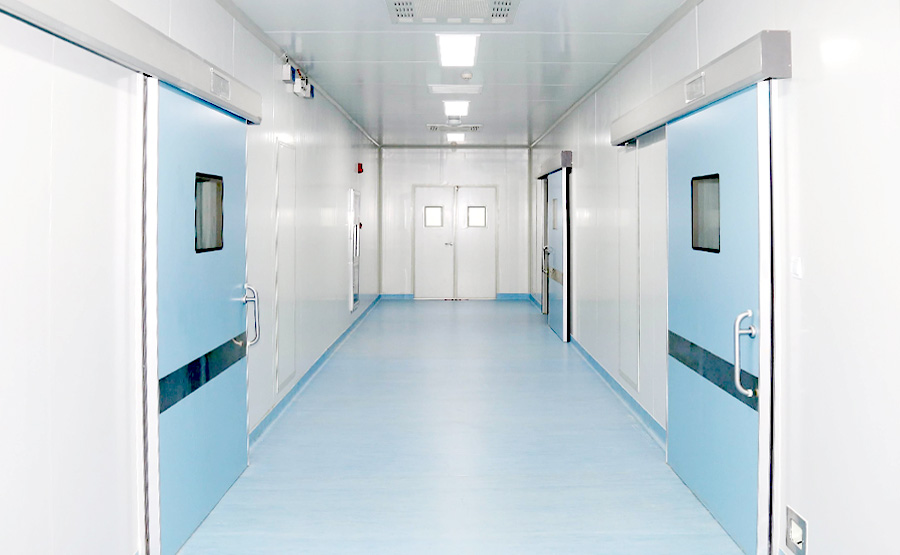
As a professional clean door supplier, WONCLEAN produces various types of clean doors, including Clean room HPL door, Clean room steel door, Clean room glass door, and Clean room emergency escape door. Each door has its unique application scenarios and advantages, from laboratory frequent disinfection to industrial pharmaceutical durability.


 online service

