What are you looking for?
Technical Analysis | Semiconductor Ceiling Access
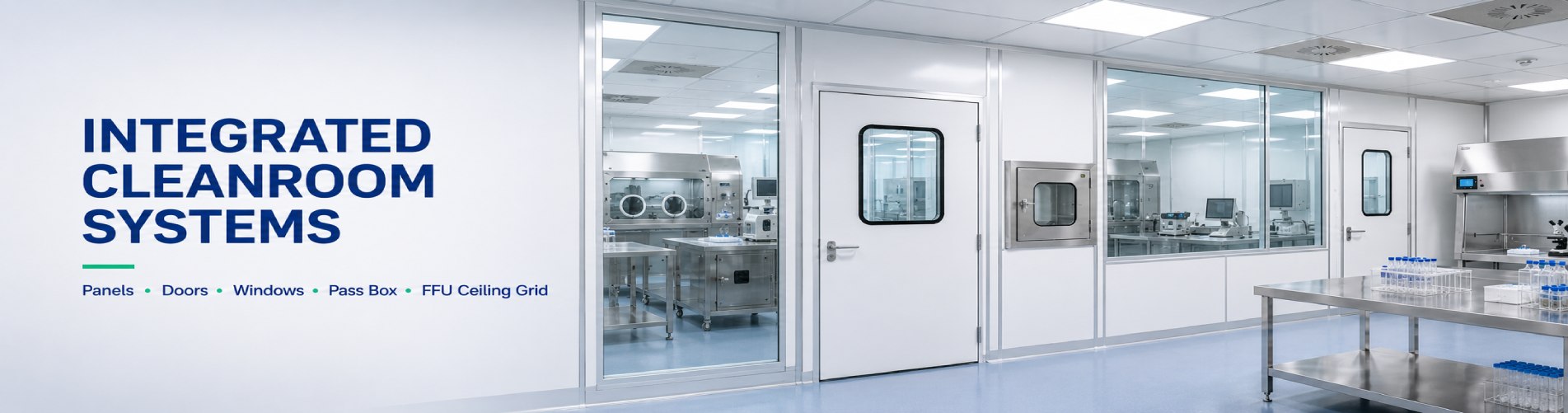
A walkable cleanroom ceiling is not just a stronger ceiling grid. In a semiconductor line, it becomes the maintenance platform for FFUs, filters, lights, cables and monitoring devices while protecting the clean zone below from unnecessary access, pressure fluctuation and recovery delays.
walkable cleanroom ceiling FFU maintenance semiconductor cleanroom ceiling modular cleanroom
| AccessService FFUs and lights without opening the clean zone. | PressureReduce uncontrolled door openings and disturbance. | LoadVerify grid, hangers and panels for service movement. | UptimeShorten maintenance windows and recovery risk. |
Semiconductor production areas often place particle-sensitive tools under dense ceiling services. When filter replacement, FFU troubleshooting or cable work requires personnel to enter the process room, the cleanroom may need gowning, tool protection, particle recovery and re-verification. A properly specified walkable ceiling moves much of that work into a controlled service layer above the room.
Cleanroom Access Logic
In semiconductor cleanrooms, the most sensitive surface may not be the wall or floor. It may be the air path over wafers, reticles, lithography support equipment, inspection tools or packaging lines. If maintenance work can be performed from above the ceiling, the cleanroom below can remain more stable during routine service.
This only works when the ceiling is engineered as a service platform, not when ordinary light-duty panels are casually walked on. The project should define live load assumptions, access routes, suspension spacing, service openings, fall protection policy, panel stiffness, gasket compression and maintenance procedures before procurement.
Wonclean cleanroom ceiling systems can be coordinated with FFUs, T-bar grids, lights, access panels, ceiling boards and wall interfaces so the ceiling package supports both cleanroom performance and practical maintenance.
Pressure Stability
A cleanroom pressure cascade is built from supply, return, exhaust, door leakage and envelope tightness. If ceiling panels lift, gasket seats leak or cable penetrations are poorly sealed, a room may drift even when the air handling unit is properly balanced.
ISO 14644-3 includes cleanroom test methods such as pressure difference, airflow and installed filter system leakage. For a walkable ceiling, this means the structure must keep the same sealing logic after people, tools and replacement parts move through the service layer.
| Decision | Cleanroom risk | Engineering control |
|---|---|---|
| Ceiling load rating | Grid deflection can disturb gasket compression. | Verify hangers, profiles and walk routes by project load assumptions. |
| Service penetrations | Cable and pipe gaps can bypass pressure control. | Use sleeves, sealants and inspection points before qualification. |
| FFU replacement route | Room entry can trigger particle recovery and downtime. | Design room-side or service-side access intentionally. |
FFU Maintenance
FFU maintenance is not only an electrical or filter task. It is a contamination-control event. Filter changes, motor service, cable work and air balancing can release particles or interrupt airflow. If each intervention requires work inside the clean zone, the facility may need repeated gowning, line clearance and recovery testing.
A walkable ceiling can place FFU access, cable trays, control panels and inspection points above the clean zone. However, the service layer must be large enough for safe movement and documentation. A narrow space that is technically walkable but hard to use will still create delays.
ISO 29463-1 provides a framework for high-efficiency filter classification. In cleanroom projects, the filter class should be paired with installation leakage control, replacement records and a ceiling design that allows the filter to be serviced without damaging the seal.
Downtime Control
Semiconductor lines are expensive to stop. A ceiling that allows planned service from above can reduce contamination exposure, shorten maintenance windows and make spare-part replacement more predictable. The cleanroom still needs documented procedures, but the ceiling can remove many avoidable room entries.
ISO 14644-16 addresses energy efficiency in cleanrooms. For FFU-based ceilings, maintainable filters, clean returns and controlled fan zones help keep airflow efficient over time instead of compensating for clogged filters or poor access with excessive fan speed.
The best design review asks four practical questions: who needs to access the ceiling, how often, with what tools, and what must remain sealed while that work is performed?
Technical Fact Check
| Fact used | Source | Design implication |
|---|---|---|
| Cleanroom classification is based on airborne particle concentration. | ISO 14644-1 | Ceiling service work should not make particle recovery harder. |
| Cleanroom testing includes airflow, pressure and installed filter system leakage methods. | ISO 14644-3 | Walkable ceiling movement must not compromise seal and pressure performance. |
| Cleanroom design should connect requirements, construction and start-up. | ISO 14644-4 | Access loads and service routes should be defined before installation. |
| Filter classification should be supported by recognized test and marking frameworks. | ISO 29463-1 | FFU selection should be tied to filter records and maintainable installation details. |
Referenced Standards
FAQ
No. A walkable ceiling must be designed and verified for the expected service loads, access routes, suspension points and panel behavior. Standard ceiling panels should not be treated as walkable without engineering approval.
It does not replace airflow design or filtration. Its value is indirect: it can reduce room entry, support stable seals and make FFU maintenance less disruptive, which helps the room maintain verified performance.
Both approaches can work. The decision depends on room class, ceiling height, filter type, shutdown tolerance, available service space and contamination-control procedures.
Check grid load, suspension spacing, FFU weight, panel stiffness, gasket compression, service routes, lighting access, cable trays, safety rules and commissioning test points.
Wonclean Engineering Note
For semiconductor lines, a walkable ceiling should be specified together with the FFU schedule, ceiling grid, pressure cascade, return-air path, lighting, control wiring and qualification plan. When these items are separated, small conflicts become downtime during service.
Useful Wonclean references: cleanroom ceiling system, fan filter unit, modular cleanroom, contact Wonclean.

 Room JT30151, Building 4, Area B, No. 925 Yecheng Road, Industrial Zone, Shanghai,China
 Info@wonclean.com
Allen@wonclean.com
Joy@wonclean.com
Info@wonclean.com
Allen@wonclean.com
Joy@wonclean.com
 +86 13671979988(Allen)+86 15950938878(Joy)


 online service

