


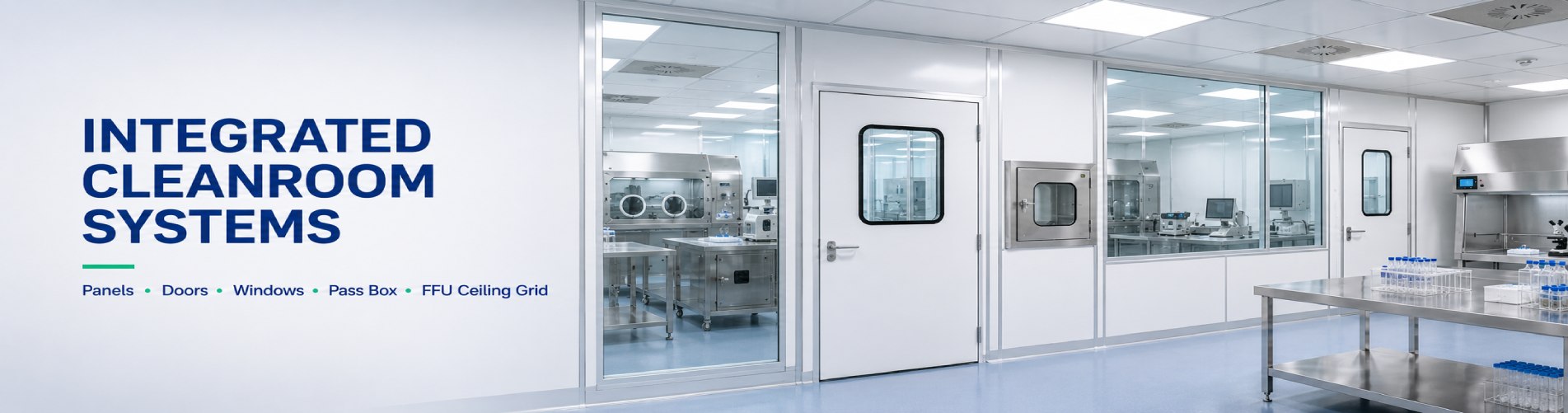
What Is HPL Door and Wall Integration? The 2026 Evaluation Standard for Premium HPL Sandwich Panel Cleanroom Systems
What dictates the structural integrity of a certified sterile environment under the newly updated ISO 14644-1:2026 and stringent GMP mandates? As global high-tech facilities scale up, choosing the right structural envelope becomes a critical multi-million dollar business decision. Leading biopharma and semiconductor brands rely heavily on a trusted cleanroom manufacturer to supply precision-engineered materials that withstand rigorous decontamination cycles. Among advanced structural composites, the implementation of heavy-duty cleanroom wall panels fabricated from high-pressure laminates has become the baseline for facility longevity. Integrating a flush-fitted cleanroom door within these modular wall assemblies prevents micro-leakages, ensuring constant positive pressure control across critical pharmaceutical containment sectors.
Why Is HPL Sandwich Panel Technology Superior to Standard Cleanroom Wall Materials?
In 2026, standard powder-coated steel panels often fall short in facilities utilizing aggressive, vaporized hydrogen peroxide (VHP) sterilization. An HPL sandwich panel is constructed by fusing multiple layers of kraft paper filled with phenolic resin under intense heat and high pressure, capped with an unyielding decorative surface layer. This creates a non-porous, chemically inert monolithic barrier that completely resists delamination, deep scratches, and localized impacts from heavy material handling equipment.
What Key Parameters Define a Certified Cleanroom HPL Door Assembly?
A cleanroom envelope is only as secure as its weakest entry point. Evaluating a cleanroom FFU ceiling grid or door requires analyzing precision structural metrics. A premium HPL door features a fully flush surface profile on both sides, completely eliminating any horizontal ledges where microbial particulate matter could settle. Combined with specialized, micro-adjustable multi-angle switching hinges, these doors provide continuous vertical sealing alignment against the structural frame, resolving long-term latch sagging issues in high-pressure airlock environments.
| Performance Metric | Premium Wonclean HPL Systems | Standard Powder-Coated Steel |
|---|---|---|
| Chemical VHP Resistance | Excellent (No degradation or blistering) | Moderate (Risk of corrosion over time) |
| Impact Resistance Rating | High (Scratch-proof phenolic core) | Low (Prone to denting and paint chipping) |
| Airtight Sealing System | Flush-fit with micro-adjustable hinges | Fixed gaskets with manual shimming |
| Surface Maintenance | Zero-porosity monolithic cleaning | Requires frequent anti-static coating |
How Do Prefabricated Modular Laboratory Infrastructure Systems Optimize CAPEX?
Deploying a high-performance hpl sandwich panel layout via a prefabricated modular laboratory infrastructure reduces capital expenditure by compressing traditional construction timelines by up to 40%. Factory-engineered interlocking joints lock seamlessly into structural ceiling grid tracks, eliminating messy on-site panel cutting and structural alterations. For global projects across high-growth manufacturing zones, this structural modularity ensures rapid scalability and fast tracking of regional GMP validations.


 online service

