What are you looking for?






Technical Analysis | Modular Biopharma Labs
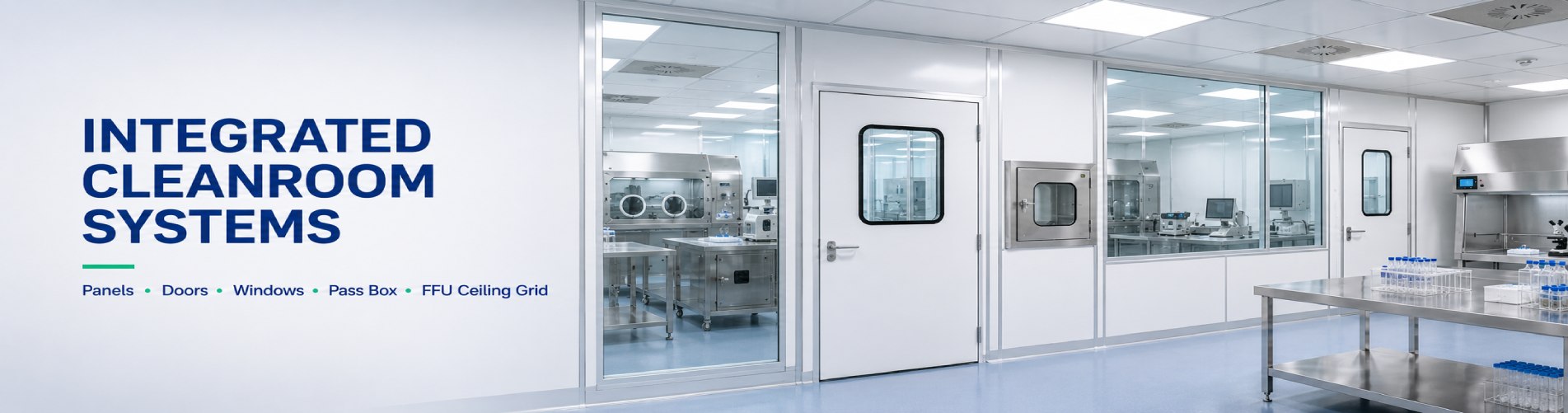
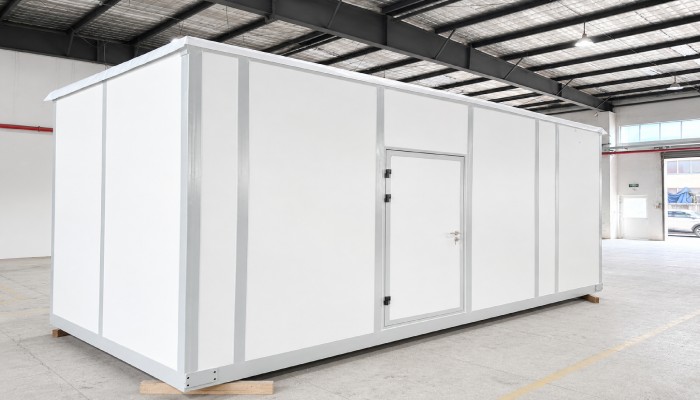
North American biopharma teams need cleanroom capacity that can be delivered faster without weakening contamination control. A modular laboratory can help when the room is engineered as a complete cleanroom system: envelope, HVAC, pressure cascade, personnel flow, material transfer and qualification evidence.
modular clean room modular laboratory cleanroom wall panels
| ISO 14644Particle classification baseline. | FDA cGMPFacility and air-handling context. | HVACAirflow, pressure and recovery. | IQ/OQEvidence planned before fabrication. |
For Wonclean, the value of modular cleanroom construction is not only speed. It is repeatability. When wall panels, ceilings, doors, pass boxes, air showers and service interfaces are coordinated before site work begins, the project team can reduce field uncertainty and create a cleaner route toward commissioning and qualification.
Capacity Strategy
Traditional cleanroom projects often depend on long building schedules, many site trades, dust control, access restrictions and late utility changes. Modular construction moves more work into a controlled fabrication environment. This is useful for clinical manufacturing support, quality control laboratories, microbiology suites, sampling rooms, gowning areas and clean storage spaces that must be delivered without disturbing existing operations.
The goal is not to avoid compliance. The goal is to make compliance easier to organize. A well-planned modular lab gives owners a clearer design baseline: defined ISO targets, cleanable materials, pressure relationships, HVAC strategy, monitoring points, personnel and material routes, and evidence that can be reviewed before the room reaches the site.
Standards Logic
ISO 14644-1 classifies cleanrooms by airborne particle concentration. In practice, the project must define the target ISO class, test locations, occupancy state and acceptance criteria. For biopharma, that is only one part of the quality picture. FDA current good manufacturing practice expectations also require suitable facilities, air handling, equipment, procedures and contamination-control practices.
A modular biopharma lab should therefore be specified around both the physical cleanroom and the operating quality system. ISO classification answers whether the room can meet a particle concentration limit under defined conditions. FDA-oriented facility thinking asks whether the room, HVAC, pressure cascade, cleaning access, monitoring and documentation support the intended operation.
| Design question | Why it matters | Define early |
|---|---|---|
| Cleanroom classification | Particle limits and testing depend on the ISO class. | ISO class, room state, protocol and acceptance criteria. |
| Process risk | A QC lab, gowning room and aseptic support space carry different risks. | Product exposure, operator activity and contamination sensitivity. |
| Airflow and pressure | Air movement controls dilution, protection and containment. | Supply airflow, return path, pressure cascade and door logic. |
Cleanroom Envelope
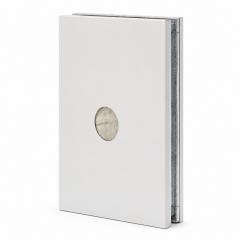
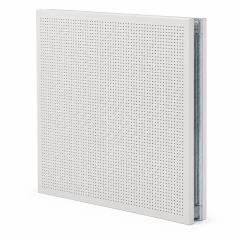
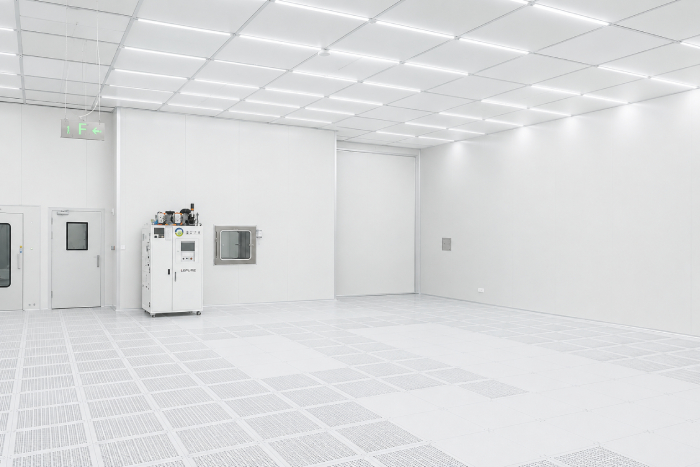
The visible parts of a modular lab, including wall panels, ceiling panels, doors, windows, flooring and lighting, form the cleanroom envelope. In biopharma, these parts matter because they must support smooth cleanable surfaces, stable alignment, sealed joints and controlled penetrations.
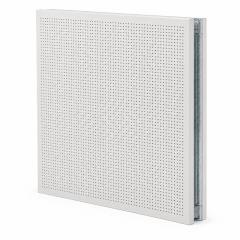
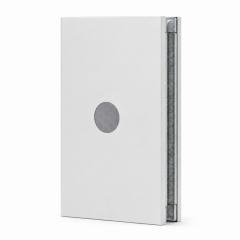
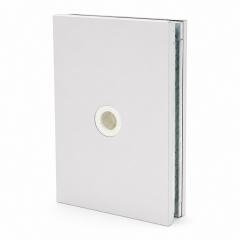
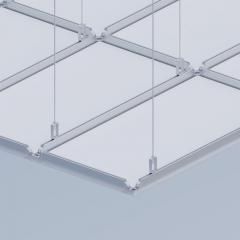
Cleanroom wall panels should support sealed joints, service integration and maintainable details around penetrations. The cleanroom ceiling system should coordinate HEPA or terminal filter modules, lighting, access panels and maintenance needs.
The modular advantage appears when the cleanroom envelope is designed as a repeatable assembly before installation, reducing uncontrolled field cutting and late service penetrations.
Air System
HVAC is the system that makes the room perform. The project team needs to define air-change strategy, filtration, temperature and humidity range, return air arrangement, exhaust, room pressure differentials and recovery expectations before fabrication.
Monitoring points should also be planned early. Differential pressure sensors, temperature and humidity sensors, particle monitoring locations, alarms and data access points are easier to integrate before fabrication than after the room arrives on site.
Flow and Evidence
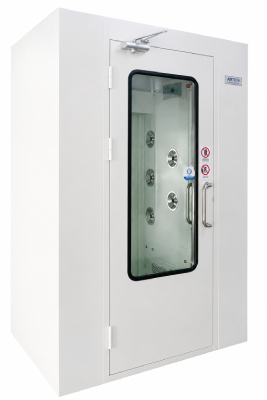
Personnel entry, gowning sequence, material transfer, waste flow and maintenance access should be part of the modular lab layout from the beginning. Personnel flow may require gowning rooms, airlocks, interlocked doors and, for some applications, a clean air shower. Material transfer may require a pass box, transfer hatch or material airlock.
Wonclean can support cleanroom wall panels, ceiling systems, doors, pass boxes, air showers and modular laboratory solutions for controlled-environment projects.
Yes, when it is designed, installed and verified for the intended process. Modular construction does not reduce the need for suitable materials, HVAC control, pressure strategy, cleaning access and qualification evidence.
No. ISO 14644 helps define cleanroom classification by airborne particles. FDA cGMP expectations also consider facility suitability, air handling, equipment, procedures and contamination prevention.
The biggest risk is usually poor interface planning around HVAC, pressure cascade, door logic, utilities, material transfer and monitoring points.
A modular lab can shorten the path to cleanroom capacity, but the real benefit comes from engineering discipline. For North American biopharma projects, the cleanroom should be specified as a complete system: ISO classification, FDA-oriented contamination control, cleanroom envelope, HVAC, pressure cascade, flow logic and documented evidence.

 Room JT30151, Building 4, Area B, No. 925 Yecheng Road, Industrial Zone, Shanghai,China
 Info@wonclean.com
Allen@wonclean.com
Joy@wonclean.com
Info@wonclean.com
Allen@wonclean.com
Joy@wonclean.com
 +86 13671979988(Allen)+86 15950938878(Joy)


 online service

