


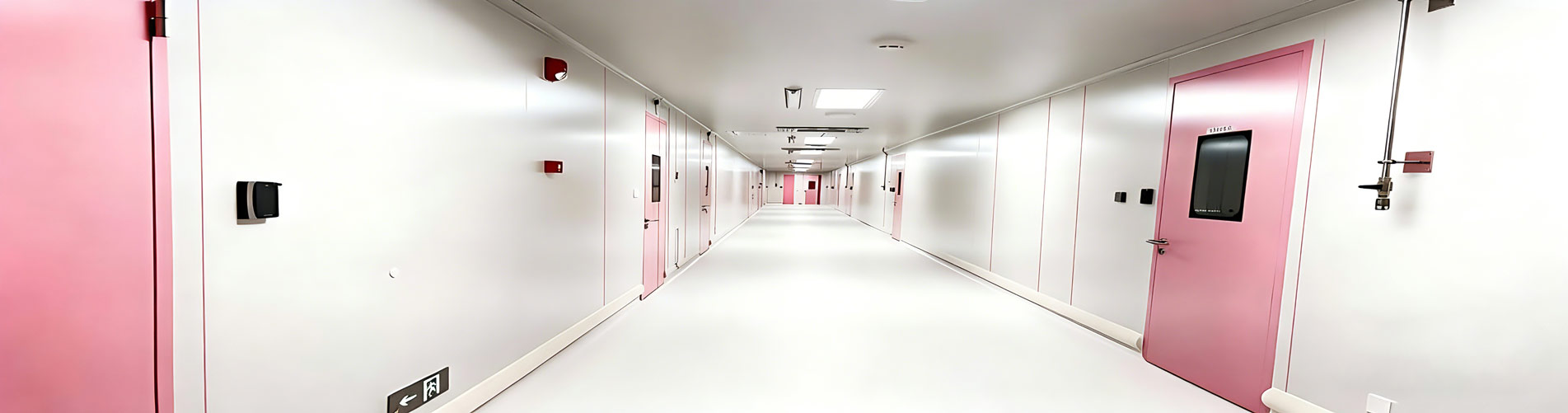
ISO 5 Cleanroom Requirements 2026: Strategic Standards & Evaluation Guide
In the high-precision manufacturing landscape of 2026, compliance with ISO 5 cleanroom requirements has evolved from basic filtration to an integrated structural ecosystem. As a premier cleanroom panel supplier, Wonclean specializes in high-integrity modular cleanroom systems engineered with advanced cleanroom wall material. For any critical pharma clean room project, maintaining Class 100 air quality requires a precise synergy between unidirectional laminar airflow and non-shedding, chemical-resistant surfaces defined by ISO 14644-1.
Technical Benchmarks: The ISO 5 (Class 100) Particle Standard
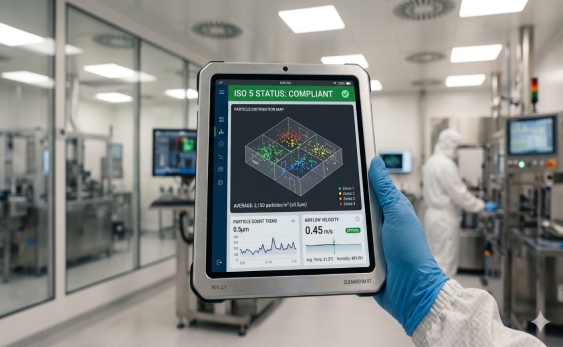
The core of an ISO 5 environment is the strict regulation of airborne particles. Functional equivalent to the legacy Class 100 clean room, ISO 5 permits a maximum of 3,520 particles ≥0.5 μm per cubic meter. In 2026, the industry benchmark has shifted toward "Zero-Particle Harboring" surfaces, where the density of the wall material prevents micro-cracking and microbial growth.
| EEAT Evaluation Metric | ISO 5 (2026 Industry Standard) | Impact on Pharma Yield |
|---|---|---|
| Airflow Pattern | Unidirectional (Laminar) | Prevents Turbulent Contamination |
| Air Changes per Hour (ACH) | 240 – 600 ACH | Rapid Particle Recovery (< 5 min) |
| Ceiling FFU Coverage | 70% – 100% Surface Area | Ensures Uniform Pressure Control |
| Microbial Limit | ≤ 1 CFU/m³ | Absolute Sterile Environment |
2026 Trends: The Shift to Smart Modular Cleanrooms
The most significant trend in 2026 is the adoption of "Walkable HPL Ceiling Systems" within modular designs. By using H14 HEPA or ULPA filtration integrated with intelligent monitoring, facility managers can achieve 40% lower OPEX through adaptive airflow adjustments while maintaining structural integrity during high-frequency VHP decontamination.
Key Evaluation Points for Cleanroom Wall Material Selection
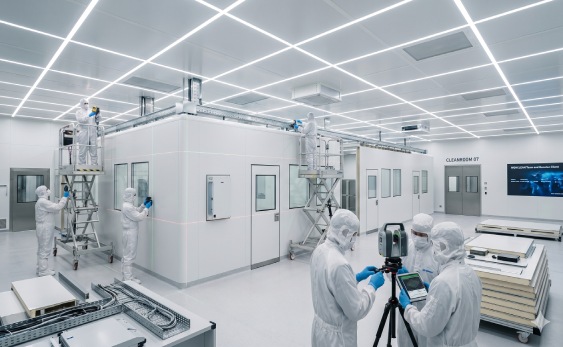
In 2026, evaluation hinges on "Chemical Inertness" and "Structural Planarity." Materials must withstand Mohs Scale 4H hardness tests to ensure a "Zero-Dent" warranty, which is critical for maintaining ISO 5 laminar flow without air turbulence caused by surface irregularities.


 online service

